I have been fascinated by moldavite since I first stumbled on it in a crystal store in Naples, Florida, twenty years ago. My fascination with crystals ran so deep that I once managed a crystal shop there, The Orchid Moon on 5th Avenue. From the moment I first touched moldavite, I felt what so many crystal lovers describe: a dizziness, and an expansion. For years I couldn't wear it for more than a few hours. That's no longer a problem for me, but some days I can't, and I've learned to respect those days.
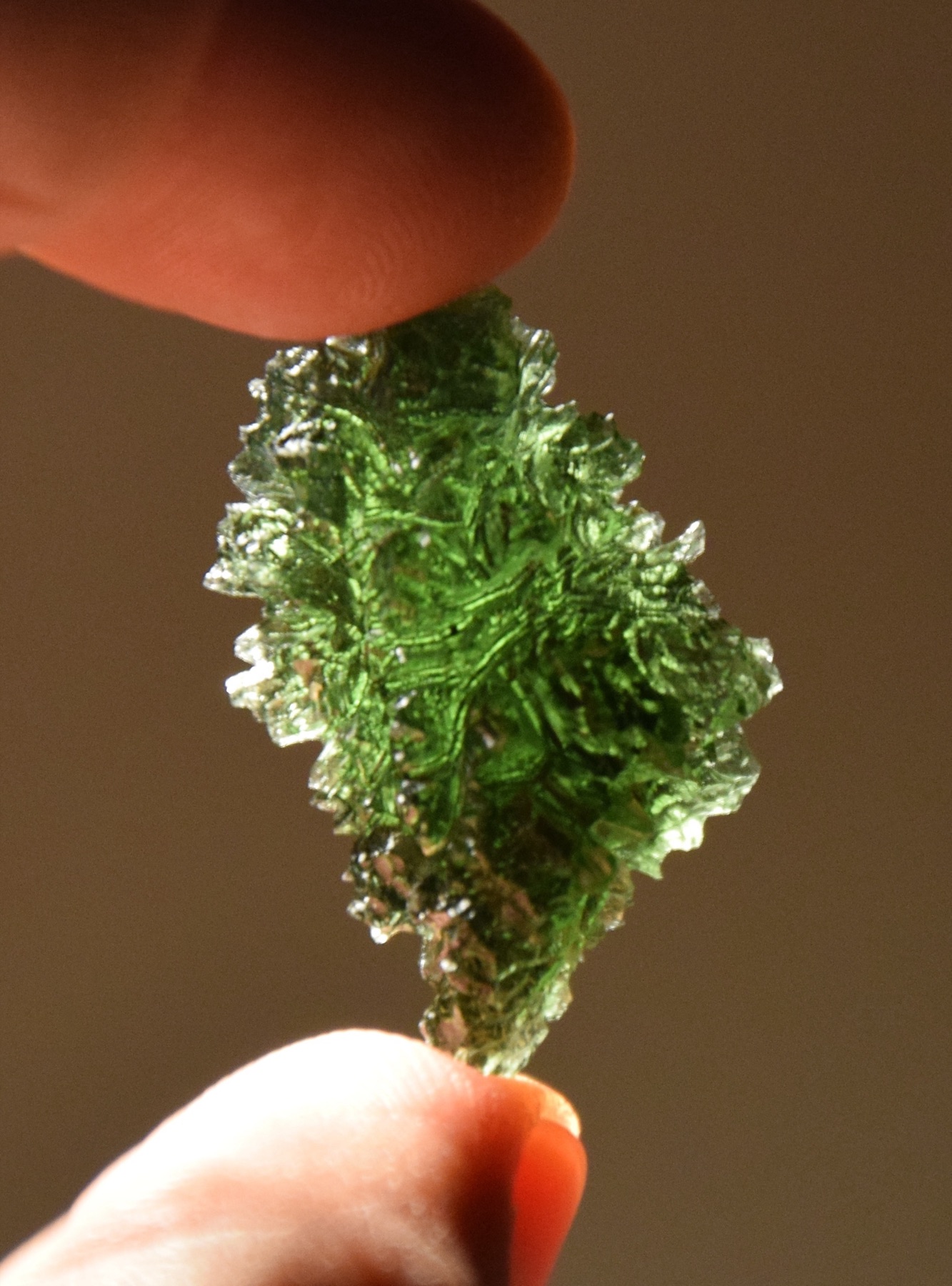
If you've never held one or worn one as a pendant, it doesn't look like much at first. It's a small chip of bottle-green glass, wrinkled and pitted like the skin of a dried fruit. Hold it up to a window and it lights from the inside, a deep forest green, and something in you goes quiet and pays attention.
I'm far from the only one. People put on a moldavite pendant for the first time and feel heat climb through their chest into their face. Collectors call it the "moldavite flush." If you have ever done kundalini yoga, you'll recognize the release and the intensity. Others describe buzzing hands, racing thoughts, dreams so vivid they wake up tired, and a sudden urge to change something big: a job, a relationship, a whole way of living. Crystal shops have a stock warning: start slow, don't wear it to bed.
That's a pattern reported for decades, on every continent, by people who were never told what they were supposed to feel. The experience is real. I feel it myself. I won't let a skeptic wave it away, and I won't pass it off as proven. The interesting question is what, in the atoms of this stone, could answer to it. The answer starts with something most people who love moldavite don't know: moldavite isn't a crystal.
OneBorn in seconds
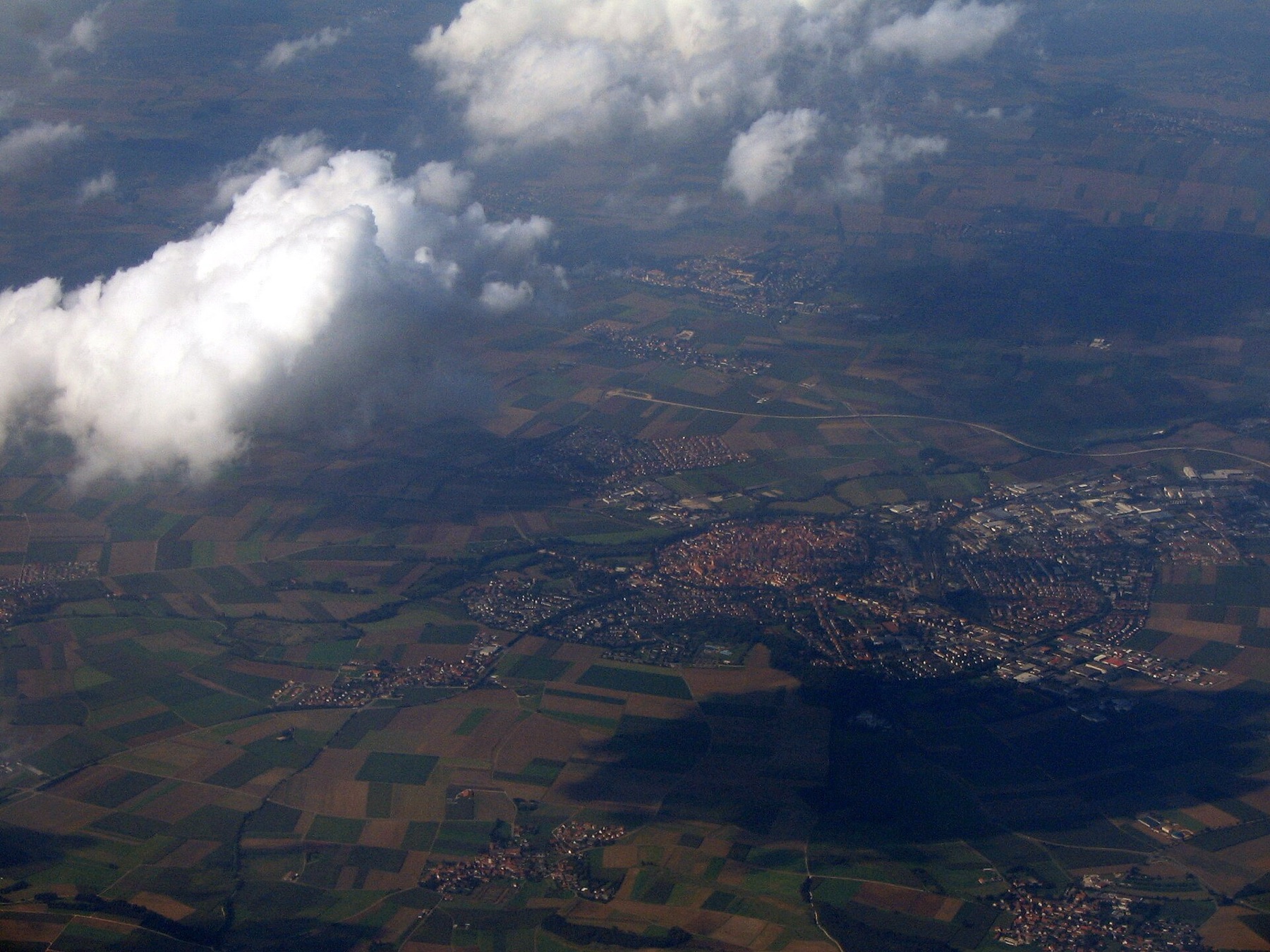
About 14.8 million years ago an asteroid roughly a kilometer wide struck what is now Bavaria at around 20 kilometers per second. The crater, the Ries, is 24 kilometers across. The medieval town of Nördlingen sits inside it, its round wall echoing the crater it was built in.
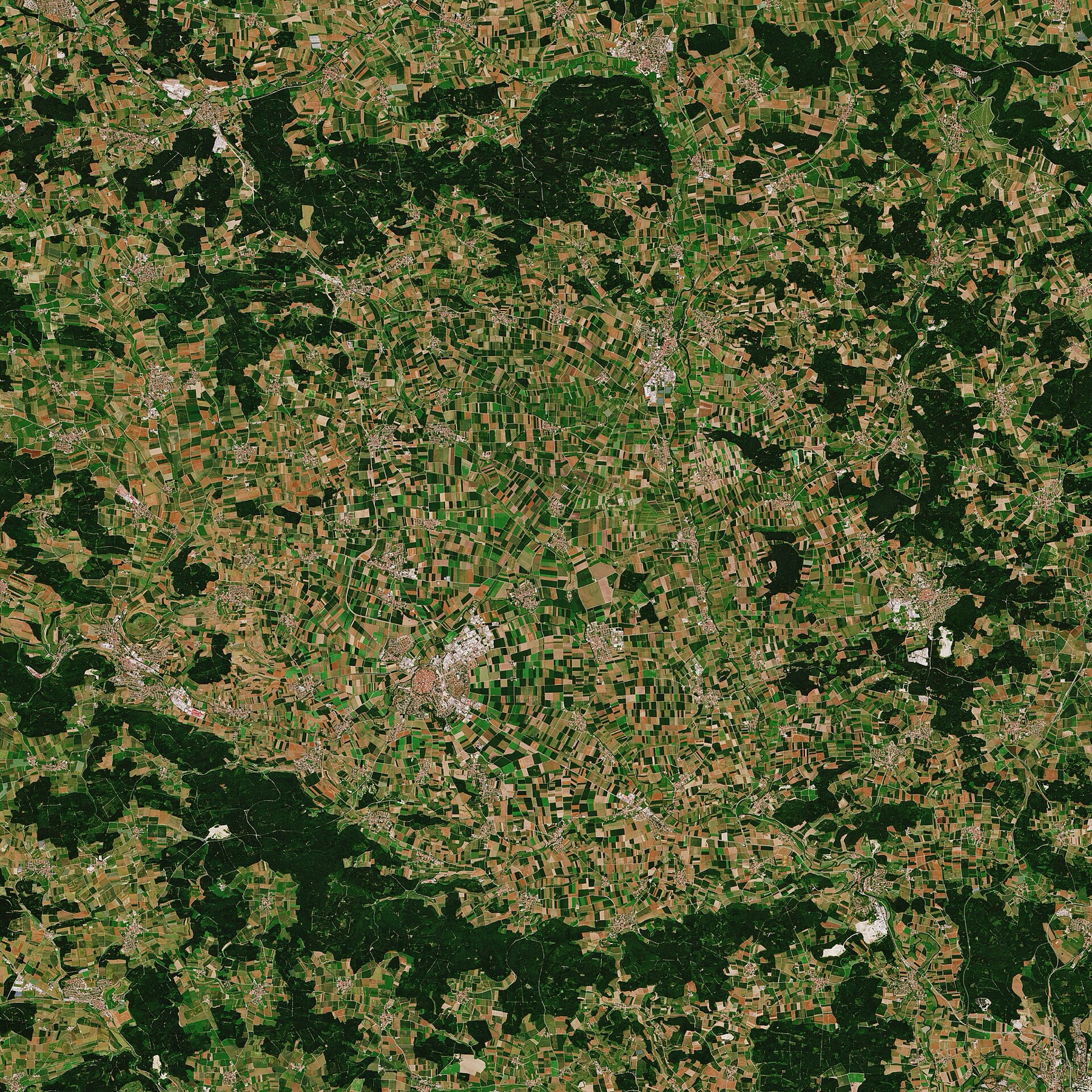
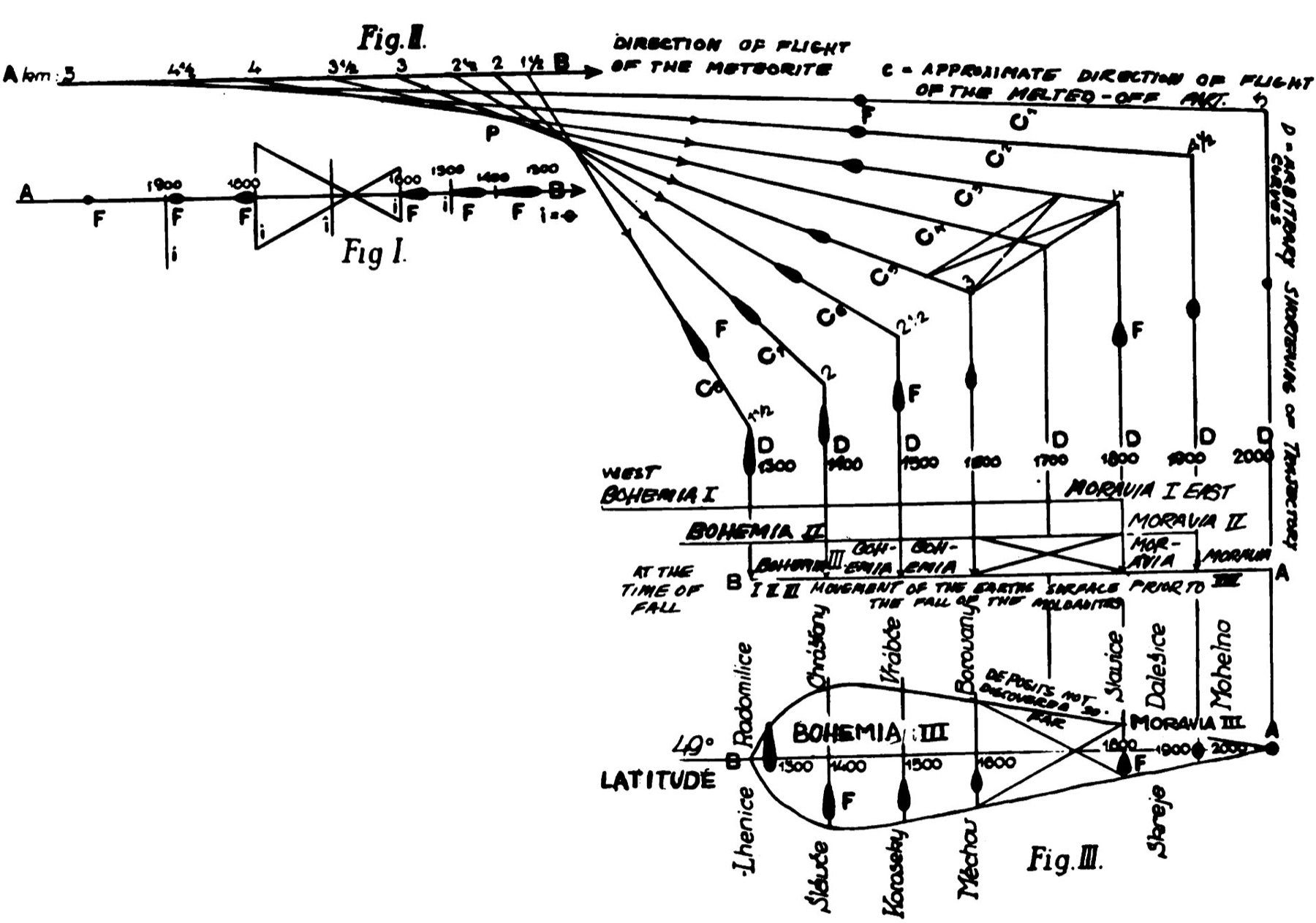
In the instant before contact, the air beneath the asteroid was crushed and superheated, and the sandy topsoil of the land surface was blasted sideways and upward as liquid. Those splashes flew as far as 450 kilometers east, froze in flight in a matter of seconds, and fell across what is now the Czech Republic, along the river the Germans call the Moldau. Every genuine moldavite on Earth comes from that one afternoon.
When molten rock cools slowly, deep underground, its atoms line up in neat repeating rows. That's a crystal: quartz, amethyst, diamond. Moldavite never had the time. Its atoms froze wherever they happened to be, like a photograph of a crowd mid-stampede. That's what a glass is.
TwoThe mysteries in the glass
Moldavite has puzzled scientists for two hundred years, and several of its mysteries are still open.
It's almost perfectly dry. The sand it came from was wet, full of groundwater and clay. Moldavite holds about one hundredth of one percent water, ten times drier than any volcanic glass on Earth. Heat ordinary volcanic glass to melting and it foams as the water escapes. Heat a moldavite and it barely bubbles. When researchers in the 1970s tried to make a glass this dry by industrial methods, they failed.
Its bubbles hold almost nothing. Moldavite is full of tiny bubbles, and many contain almost no gas at all. They seem to have formed where the air was nearly a vacuum, above the dense layers of the atmosphere, while the glass was still in flight. These stones flew above most of the sky before they fell.
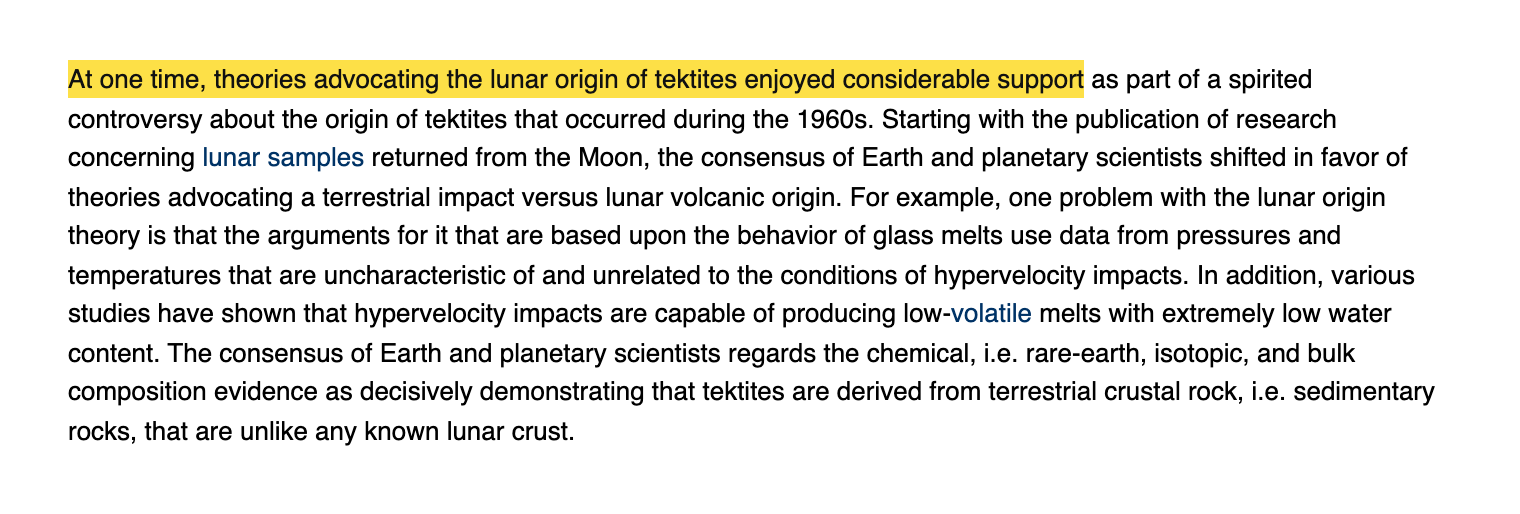
It was once thought to come from the Moon. Because it is so dry and so pure, serious NASA scientists in the 1960s argued that tektites like moldavite were splashes from the Moon. The only other glasses that dry were the ones brought back by Apollo. The Ries crater settled the question in favor of Earth, but it tells you how strange this material is.
It carries more than its source. Moldavite is richer in potassium, rubidium and caesium than the sand it came from, and poorer in iron. Something in the plasma of the impact sorted the elements, and researchers are still working out how.
People have treasured it for 40,000 years. Prehistoric people in what is now the Czech Republic and Austria found moldavite and worked it into tools and ornaments. Some pieces date to the Aurignacian period, around 43,000 to 26,000 years ago, the era of the first cave paintings. Moldavite has also been reported at Willendorf in Austria, the site of the famous Venus figurine. Long before anyone knew where it came from, people kept it.
ThreeThe bell and the record
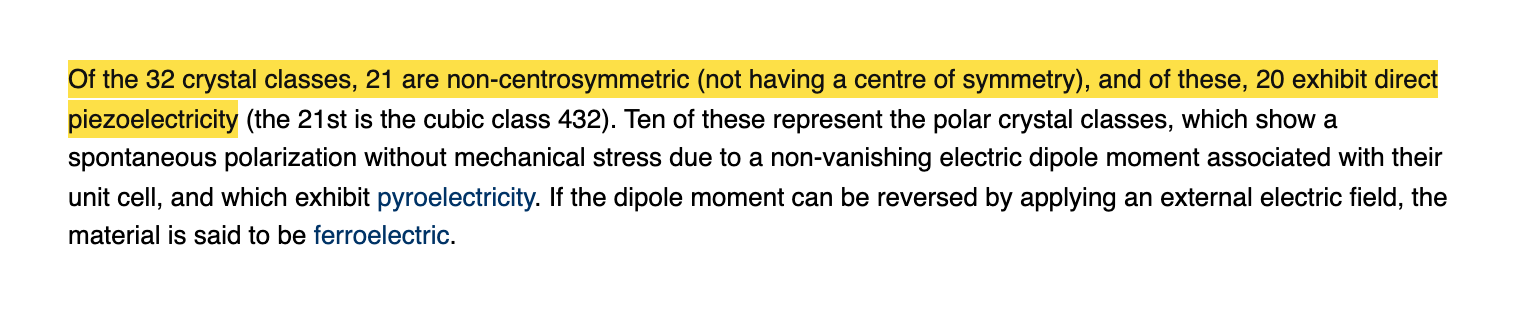
Almost every idea about crystal energy rests on order. Perfect structure lets a crystal ring. Give quartz a pulse of electricity and it vibrates at one steady frequency, which is why it keeps time in your watch. Squeeze it and it makes a small voltage, which is piezoelectricity. I've written about that side of the story in Crystal Healing: New Age Hoax or Leading Edge Science? and Crystals & the Code of Life.
Moldavite breaks every one of those rules. With no lattice it can't ring, it can't be piezoelectric, and its magnetism is almost silent (Rochette and colleagues, Geosciences, 2019). By the usual story it should be the weakest stone in the shop. Yet it's the one people can't wear.
So the question changes. Matter can do two things: it can ring, or it can remember. Ringing needs order. Remembering needs the opposite. A sheet of graph paper is perfectly ordered and says nothing. A page of handwriting is irregular, and that's the page that carries a life.
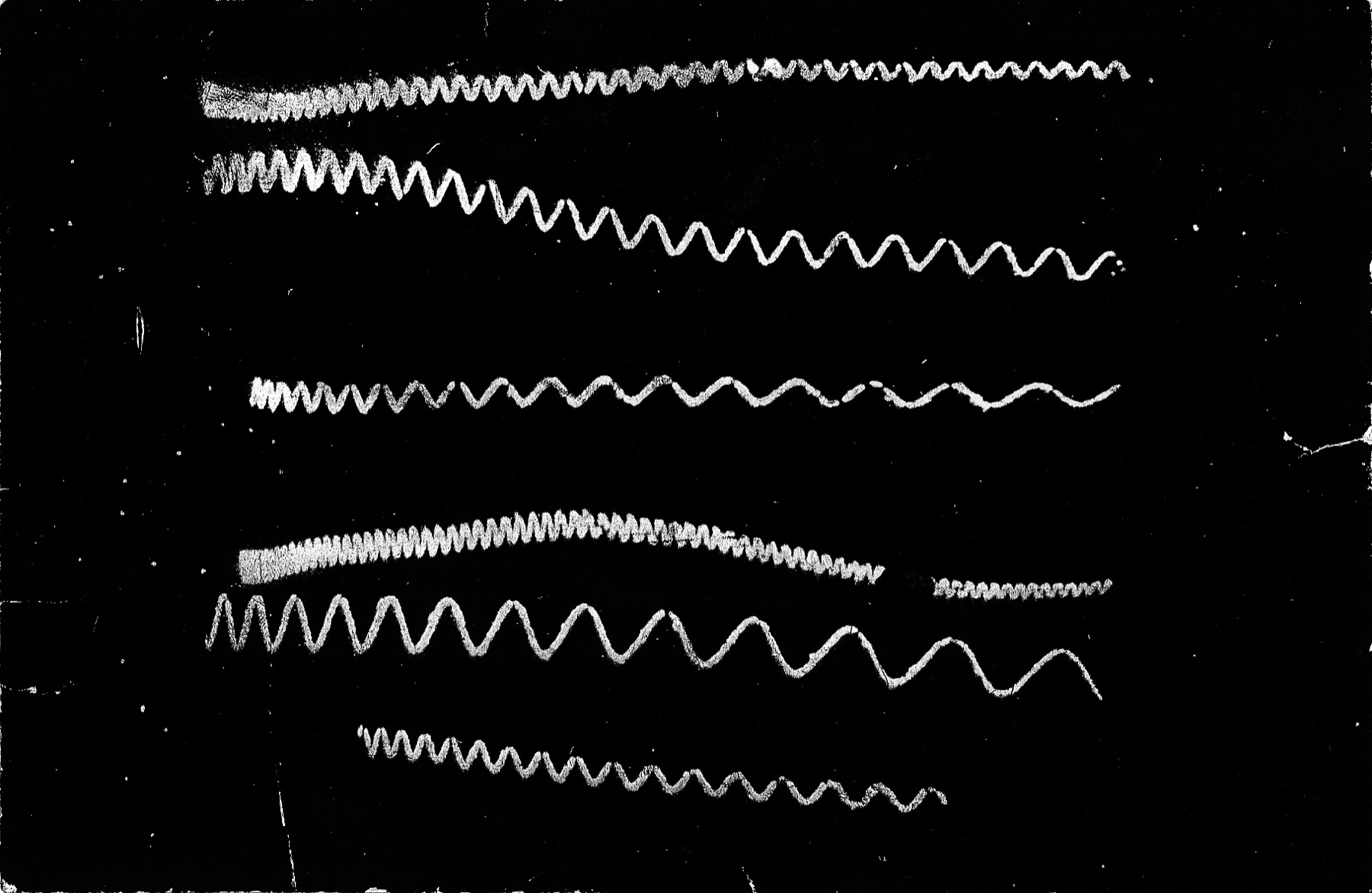

Quartz is the tuning fork. Moldavite is the record.
FourWhat's frozen inside
The short version: when the melt froze in seconds, it froze a mess, and a frozen mess is a recording.
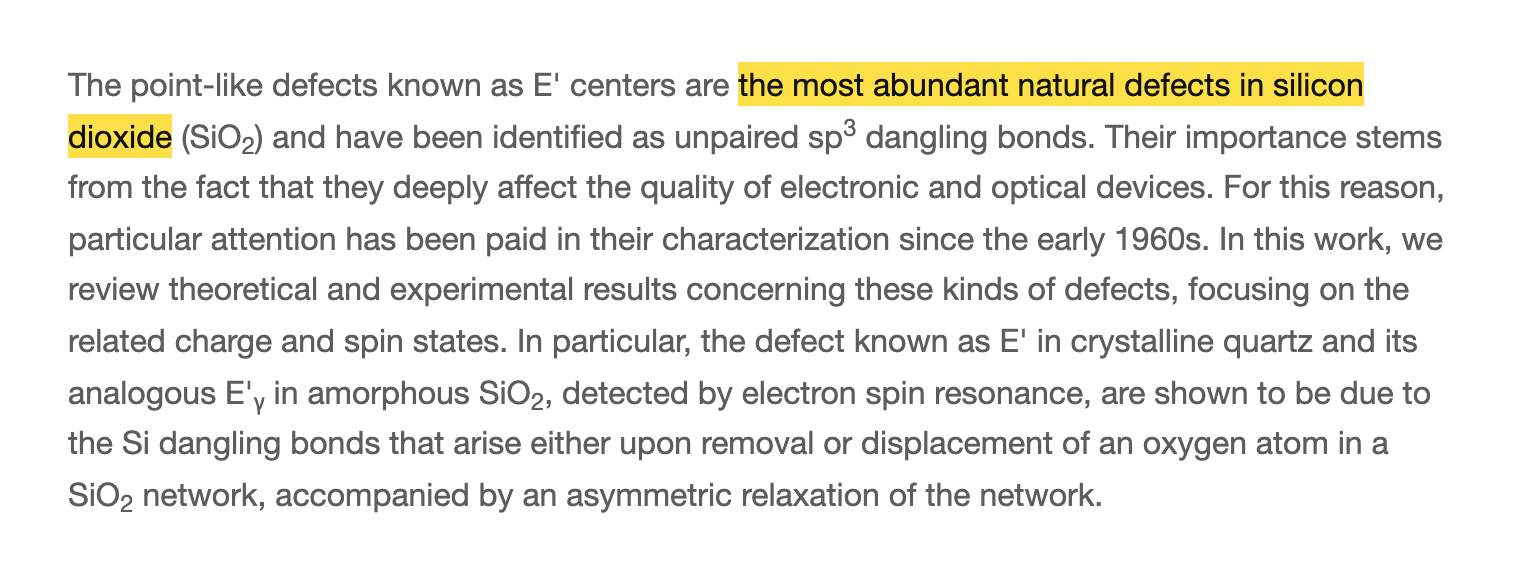
Unfinished handshakes. In quartz, every silicon atom holds hands with four oxygen atoms. In flash-frozen glass, countless atoms were caught with one hand open, holding a single unpaired electron. These dangling bonds are the most common natural flaw in silica, and each one is a tiny magnet that can point one of two ways.
A fifteen-million-year tape. Those open hands are traps. For millions of years, natural radiation has knocked electrons loose and some have fallen into the traps and stayed. Warm such a glass and it glows faintly as they escape. Geologists use this effect to date ancient materials. Moldavite was recording its surroundings long before there were people to record.
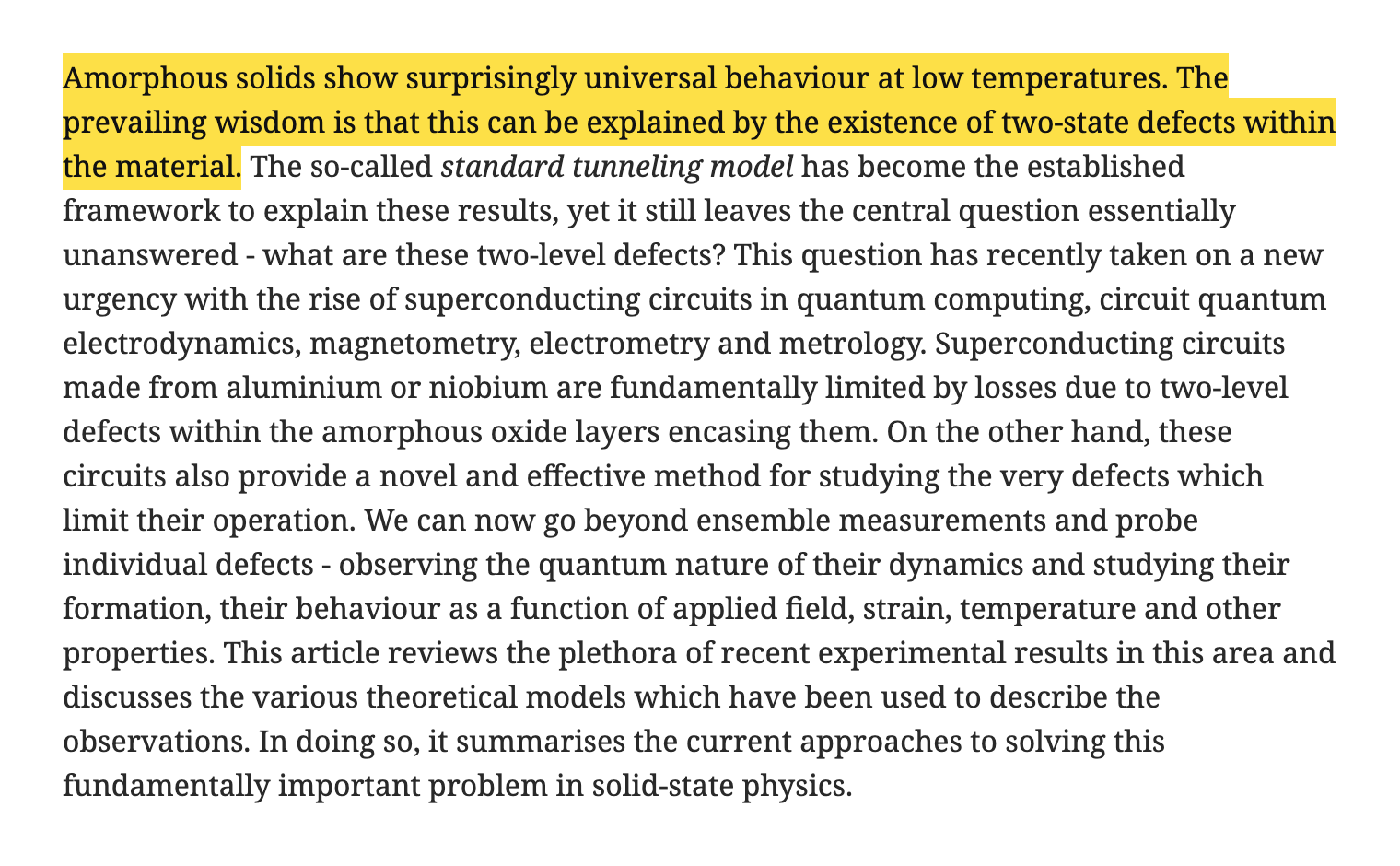
Switches only glass has. Scattered through nearly every glass are tiny clusters of atoms that can sit in either of two positions and, at the quantum level, flicker between them. Perfect crystals don't have them. Quantum-computer engineers now watch and control individual ones.
This is ordinary solid-state physics, and it adds up to something unusual: a stone that's quiet in the ways we usually measure energy and crowded in the ways we usually don't look.
FiveWhy scramble is storage
Picture a huge web of tiny switches, each tugging on its neighbors. It can't satisfy every tug at once, so it settles into a compromise, and it has an enormous number of compromises to choose from. Each one is a stable pattern, and each stable pattern is a stored memory. The more tangled the web, the more it can hold.
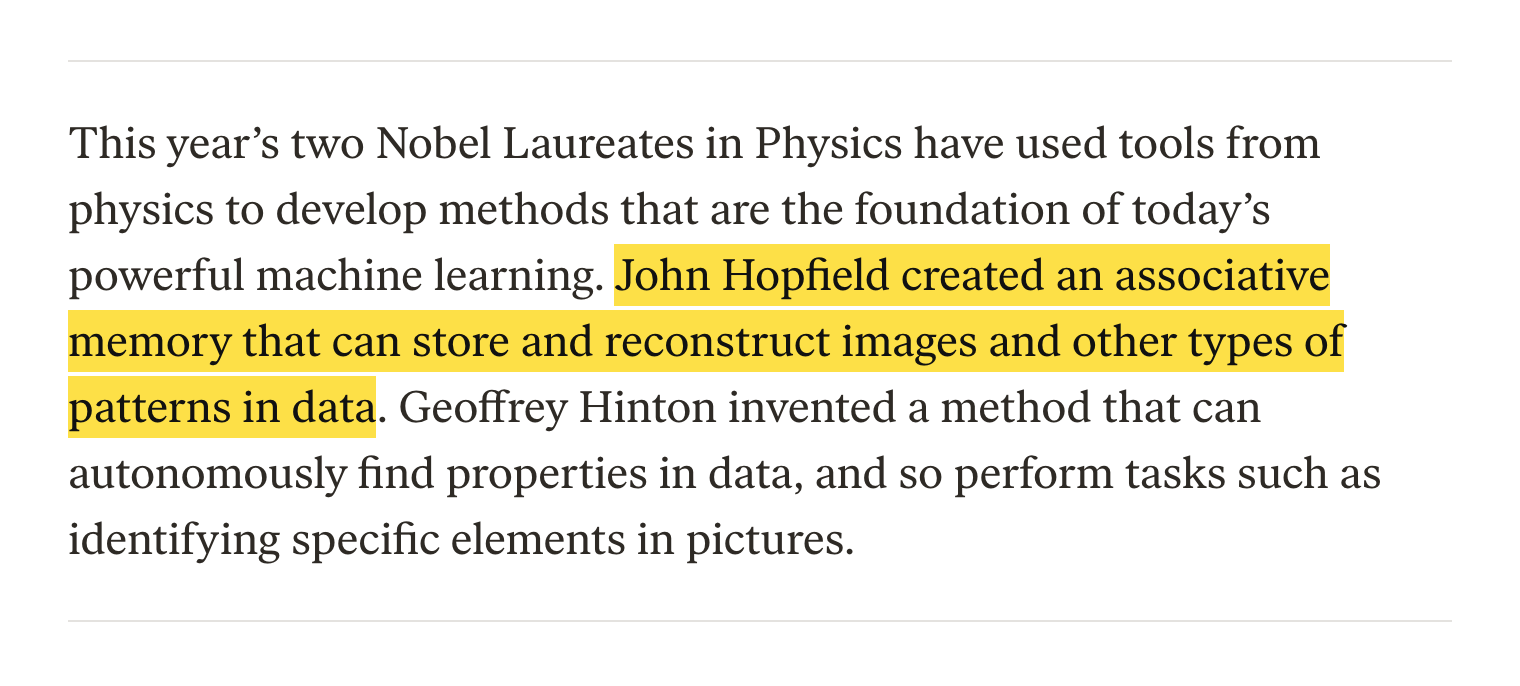
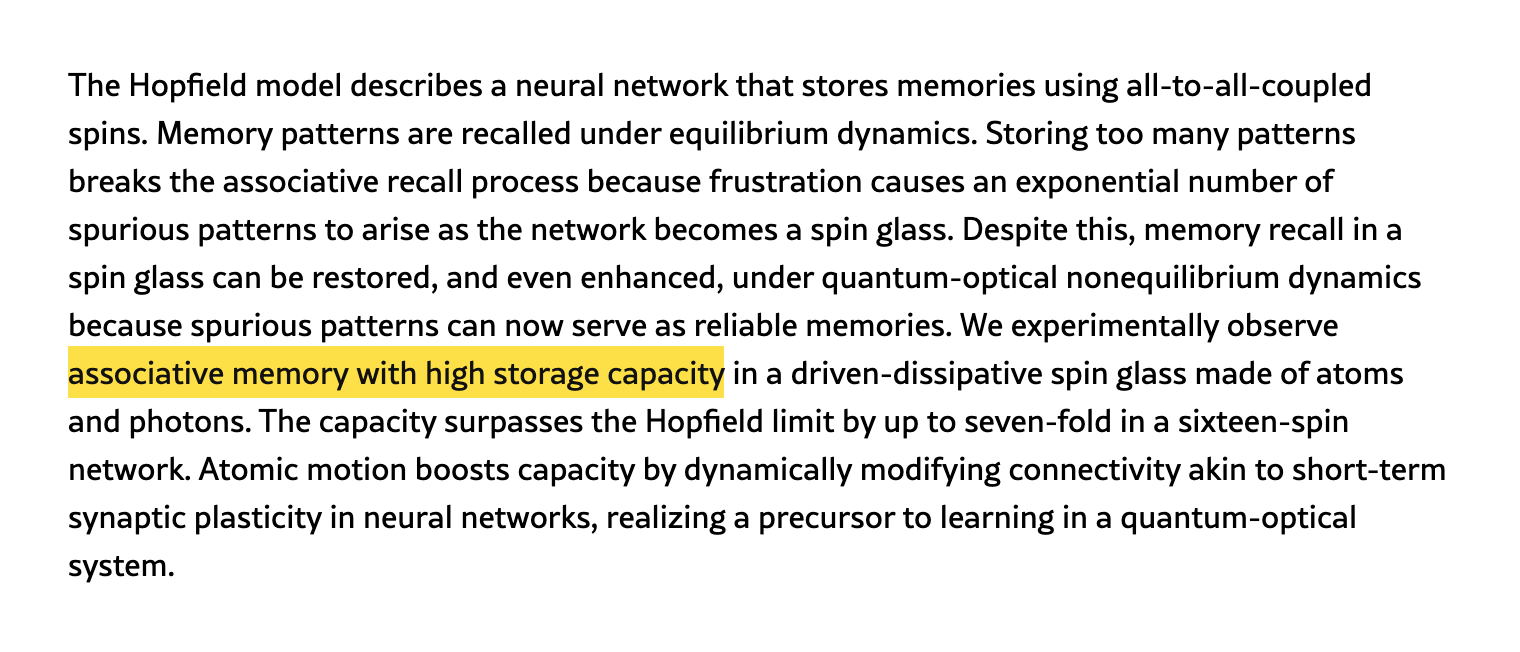
John Hopfield shared the 2024 Nobel Prize in Physics for showing that a tangled network of two-way elements works as a memory, the same principle your brain relies on. You don't remember your childhood because your neurons sit in a neat grid. You remember because they form a dense, tangled net.
Order forgets. Tangle remembers.
SixShape survives, size is forgotten
The short version: flash-frozen glass keeps the shape of things and lets go of their size, and the same rule shows up at the edge of a black hole.
When moldavite froze, each silicon atom kept its small pyramid of four oxygens, at almost exactly the angles of a perfect crystal. What it lost was the long-range grid. Shape kept, scale forgotten. Mathematicians call anything that keeps angles but forgets size conformal. The Mercator map is the everyday example: true angles, which is why sailors loved it, and wildly wrong sizes, which is why Greenland looks as big as Africa.
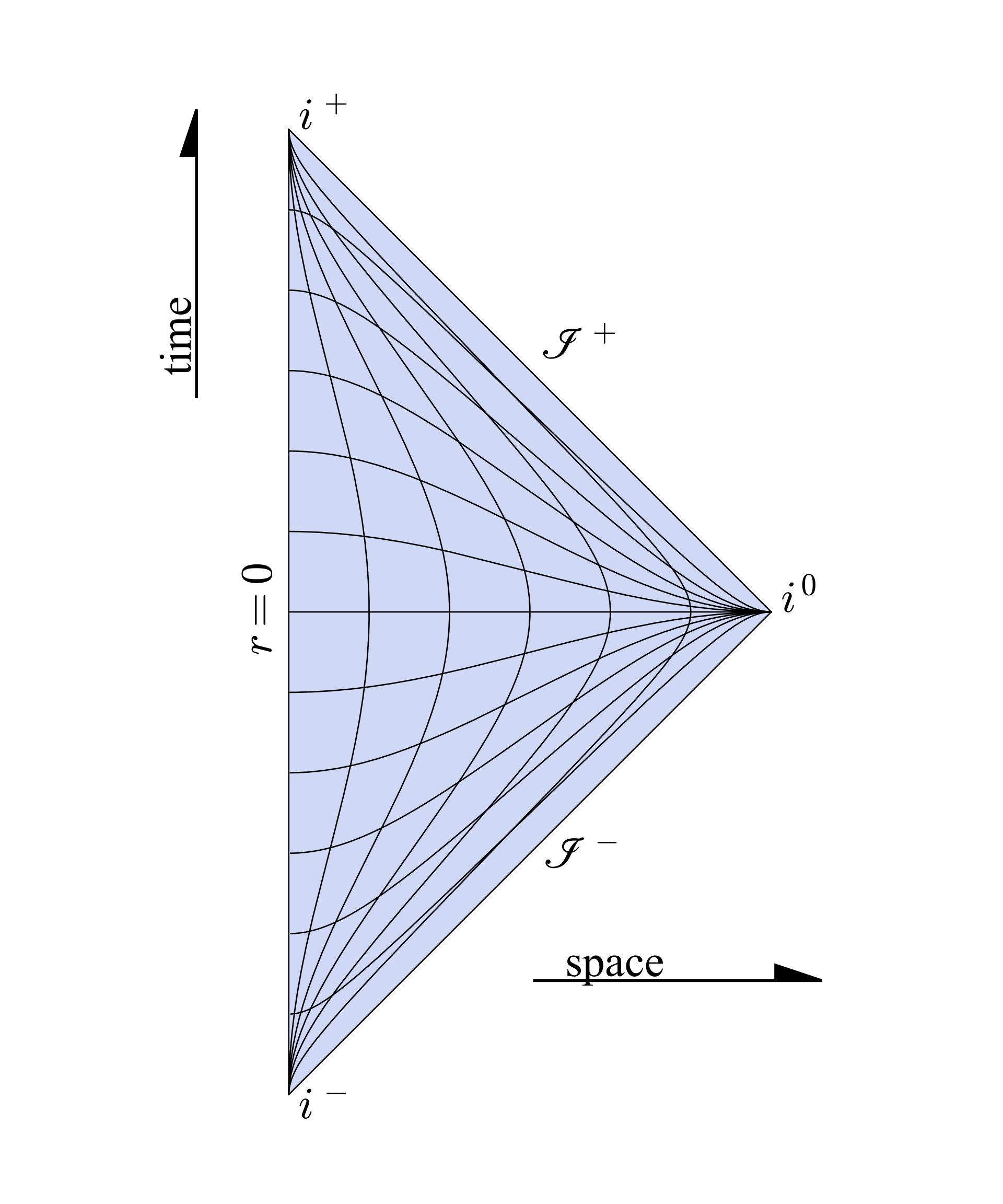
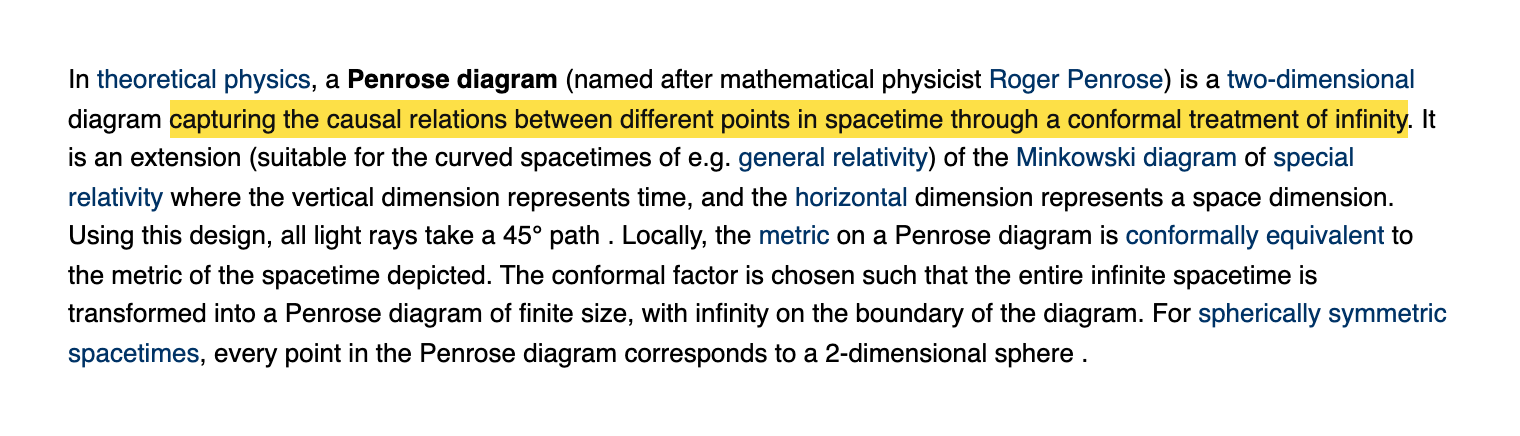
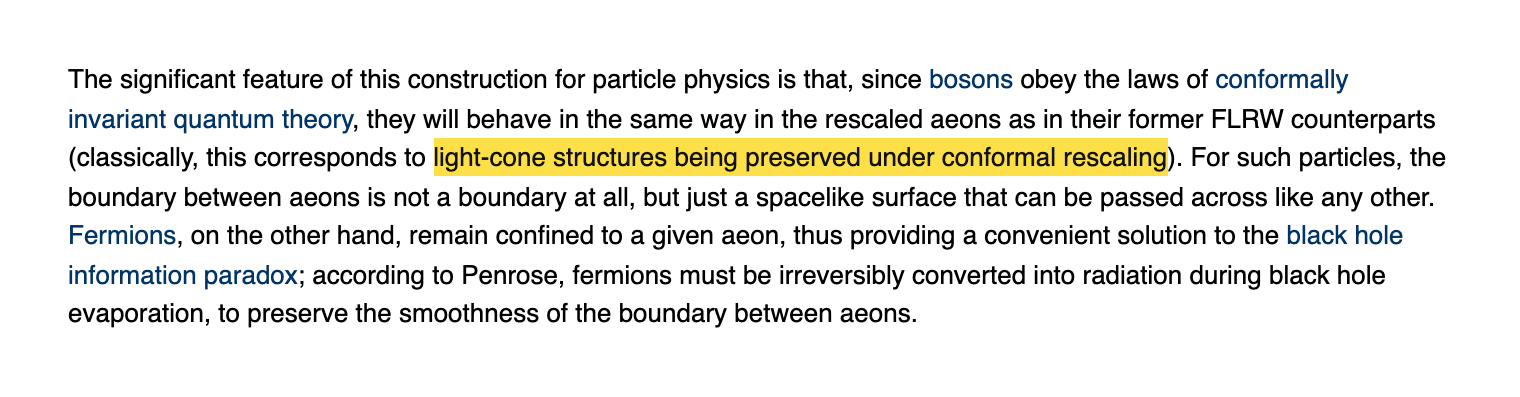
Roger Penrose, Nobel laureate for his work on black holes, built his deepest ideas on this. To draw a black hole or the whole universe on one page, he used a conformal map that keeps the angles of light true out to infinity. In his boldest theory he proposed that at the end of the universe, when nothing with mass remains to measure size by, only shape survives, and it becomes the seed of the next universe.
Moldavite isn't a black hole, and this is a rhyme rather than a shared mechanism. But in the most violent events nature knows, what survives is shape, not size. Moldavite is that law in a form you can hold.
SevenThe two faces of everything
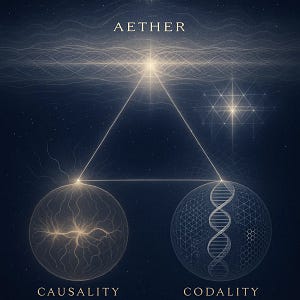
My father, the theoretical biologist Sungchul Ji, called it gnergy: reality has two faces that always travel together, energy and information. With Joshua Davis he distinguished two ways things connect. Causality is one thing pushing another. Codality is two things correlated through a third that holds a shared code, the way siblings resemble each other through DNA rather than by shaping each other's faces (Ji and Davis). I followed that thread in Bridging Energy and Information.
Crystal · the energy face
Order. It rings. It works by resonance, by push.
Glass · the information face
Disorder. It remembers. It holds the code.
My earlier writing on crystals was about the first face. Moldavite is the second. The traditions that treated certain stones as vessels of memory were reading by hand what our instruments are only now learning to measure.
EightWhy it is "too much"
Why do so many people call moldavite a stone of accelerated spiritual evolution? Why do they say it amplifies intention and shrinks the distance between what you intend and what shows up in your life? And why does that leave so many disoriented?
Walk a microphone too close to a speaker and the room fills with a squeal. Nothing new was added. The loop got shorter. Hold a mirror three inches from your face and it shows you everything. Same mirror, shorter distance.
I believe this is what moldavite does. It has no energy of its own to blast at you. As a memory, it takes what you bring and holds it close. In ordinary life there's a long, slow loop between who we intend to be and what we meet, and that distance is a mercy: it gives us time to soften and grow. Moldavite shortens the loop. A clear intention comes back as acceleration. Old grief, unspoken fear or a life you've outgrown comes back louder too, and that's the flush, the restlessness, the urge to change everything at once.
The people who take it off aren't failing. They're turning down the gain.
The physics supports half of this strongly: moldavite is a dense memory material, built to hold pattern rather than broadcast energy, which fits a stone that amplifies what you bring. What science hasn't shown yet is the other half, a measured path by which intention is written into the stone and returned. I believe the loop is real because I feel it. Believing and demonstrating are different things.
NineHow to be with it
- Know what it is. Feedback is frightening if you think the building is coming down. It's just loud if you know someone moved the microphone.
- Set your intention first. If the stone amplifies what you bring, what you bring matters. A clear signal comes back clear.
- Start slow, and take it off when it's too much. You're the one who sets the gain.
- Let it be cleared. In the lab, gentle heat really does reset this kind of glass by emptying its traps. Don't put yours in the oven. Traditions clear stones with breath, water, moonlight and rest, and it's striking that the idea has a physical counterpart in this exact material.
TenThe flower that breathes
For several years I've been part of a work called Scalar Flower. It began as a vision received by the seer Vedha on February 25, 2023: the Flower of Life laid over the wheel of the heavens as a new model of the sky. We then rebuilt the birth chart from real astronomical positions, every planet at its true height, as a three-dimensional field you can turn in your hands.
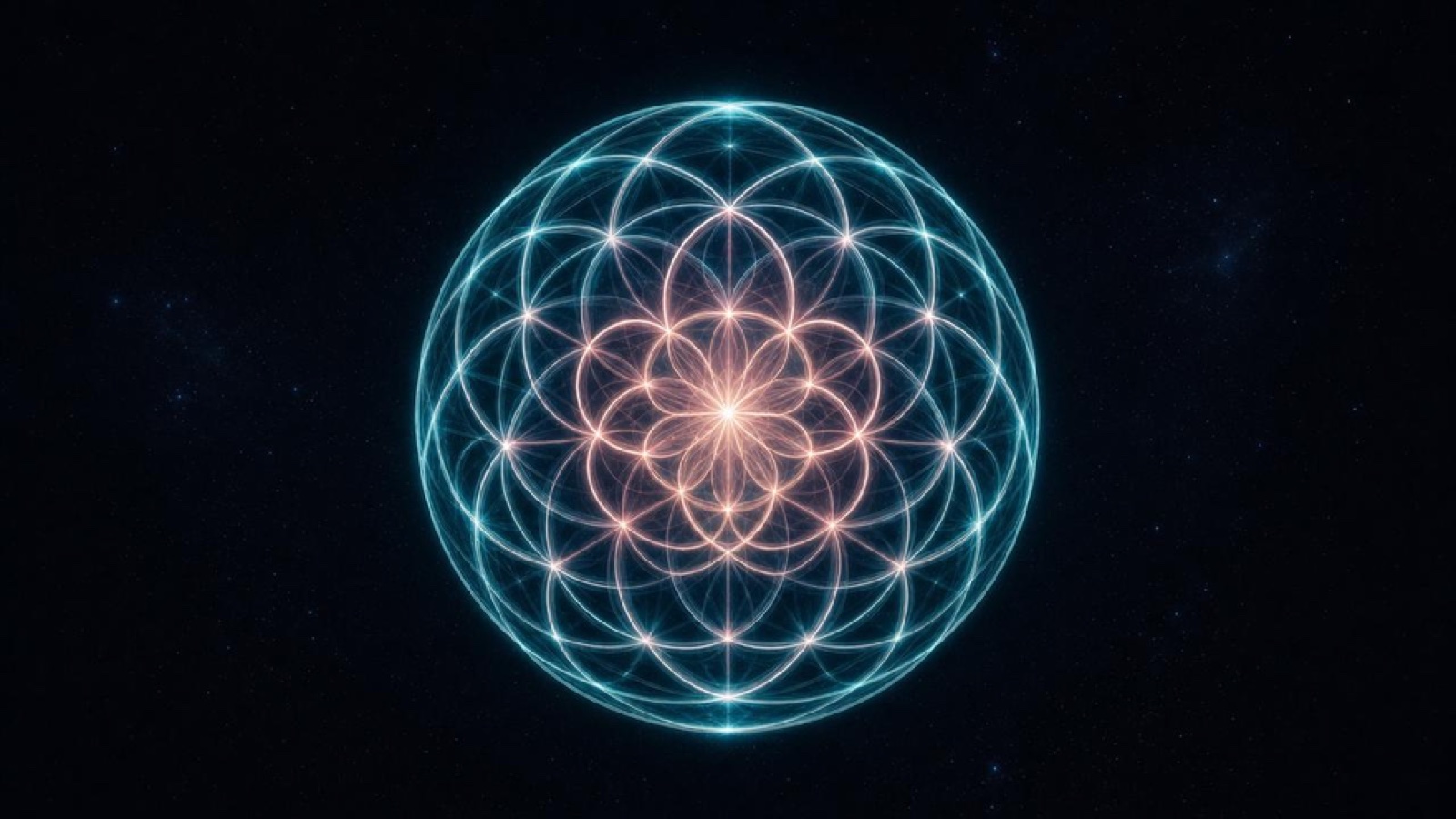
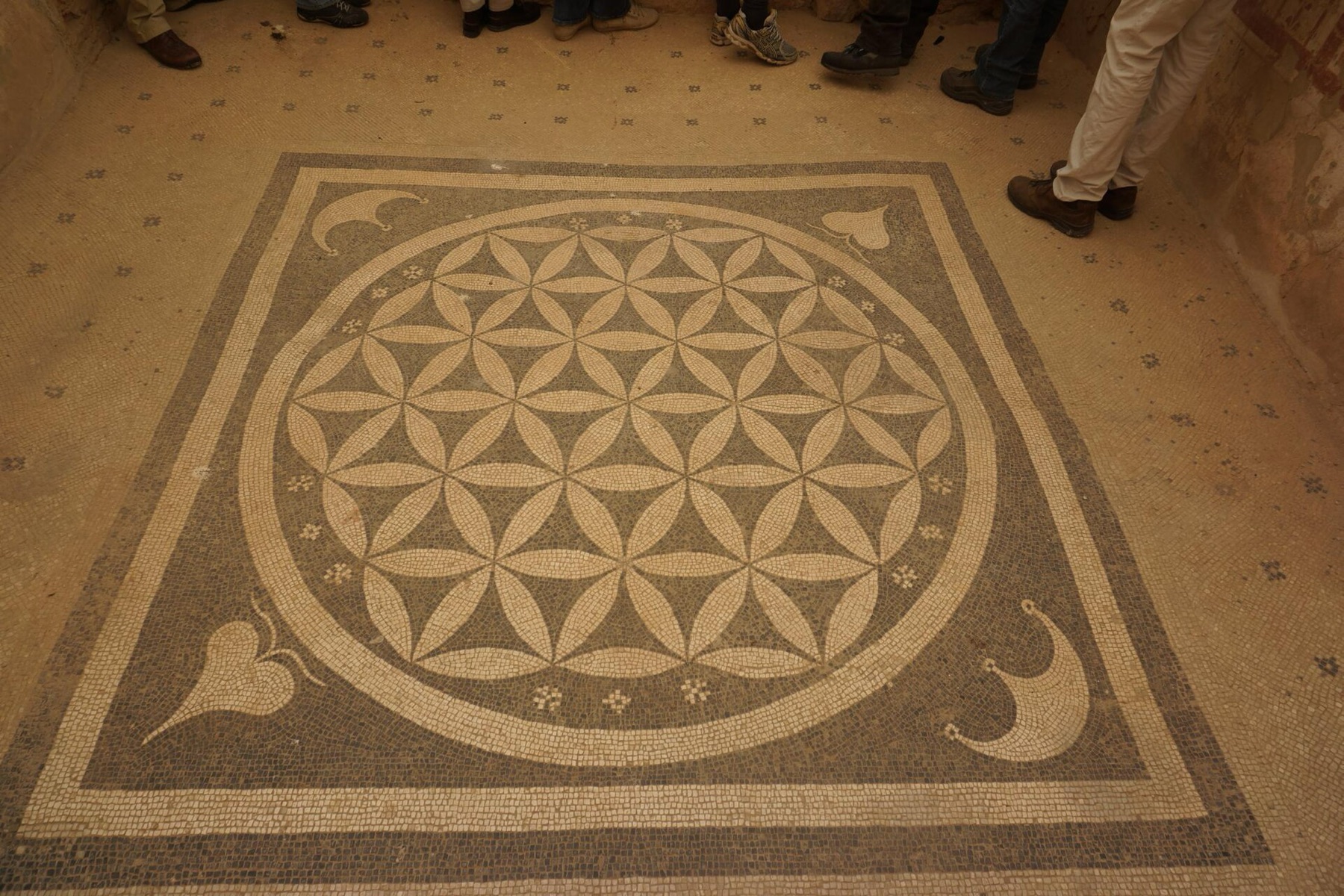
Understanding moldavite, I realized I'd been building its twin. Scalar Flower is a living, breathing talisman of the same principle.
Both are records of one sky-moment. Moldavite is an impact frozen into glass. Your chart is the moment you arrived frozen into geometry.
Both keep their shape when the frame changes. Scalar Flower's core measurements come out identical in every zodiac, house system and tradition. Turn the field any way you like and its relationships hold. It's the conformal law again, at the scale of one human birth.
Both are anchored in memory. Every chart is anchored on the lunar nodes. In the Vedic tradition the south node, Ketu, signifies the deep past, and Ketu rules the nakshatra Mula, "the root," exactly where astronomy places the heart of our galaxy. The axis the instrument stands on, the ruler of the galactic root and the star-station named "root" form a single knot.

Both are records, not forecasts. We tested whether Scalar Flower predicts lives, published the answer, and it doesn't. It shows the shape of the ground you were born standing on and hands the pen back to you: a field of choice, not a forecast. That's a talisman in its oldest sense, a held pattern you return to. And it's living, because your field opens from the still flower of your birth into a turning spiral that moves with your life.
The stone remembers the sky. The Flower remembers you.
ElevenWhat we know and what we don't
Solid: moldavite is impact glass made in seconds 14.8 million years ago; it is disordered and full of measurable traps and two-way switches; disordered networks of two-way elements are memory systems; and the experience of intensity is real and widely shared.
Not shown yet: a measured path by which intention is written into the stone. The cleanest quantum memory in glass has been seen in deep cold, not in a warm hand. And we don't yet know whether the intensity is the stone meeting us, or us meeting ourselves with the stone as a focus.
Testable: record a moldavite's defect fingerprint with an electron spin resonance spectrometer and a thermoluminescence reader, have someone charge it the way practitioners do, with an identical-looking fake as a blind control, and measure again. Either result would teach us something true.
Moldavite is a piece of frozen sky, glass born in seconds out of catastrophe, carrying a tangle of traps and switches that has been recording the world since long before us. As matter goes, it's closer to a memory than a bell. The millions who felt that something is held in this stone weren't fooled.
And when the stone is too much, set it down. Turn the Flower instead. Look at the shape you came in with. Then pick up the pen.