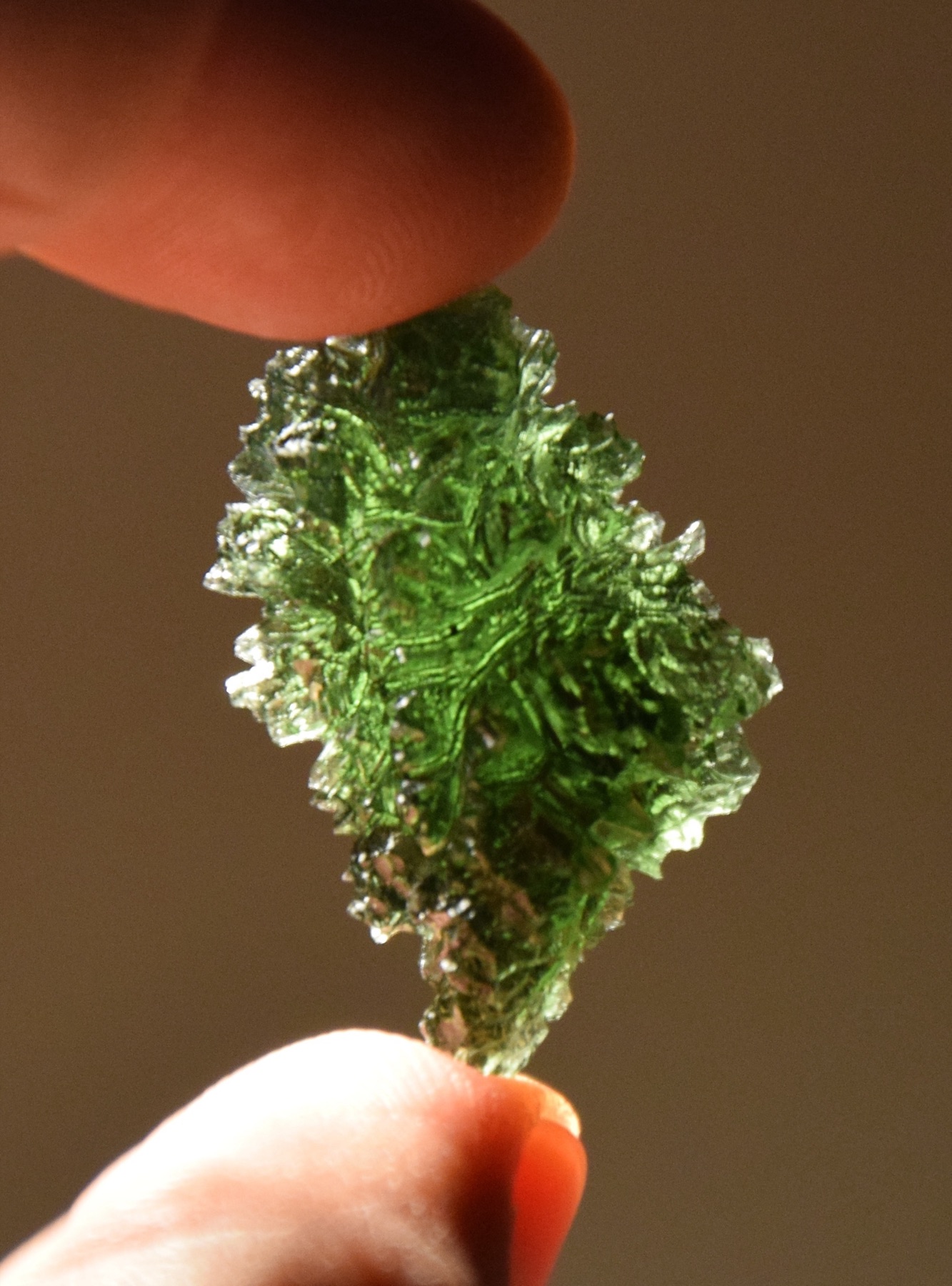
I keep a piece of moldavite on my desk. Some days I hold it while I write. Some days I can't, and I've learned to respect those days.
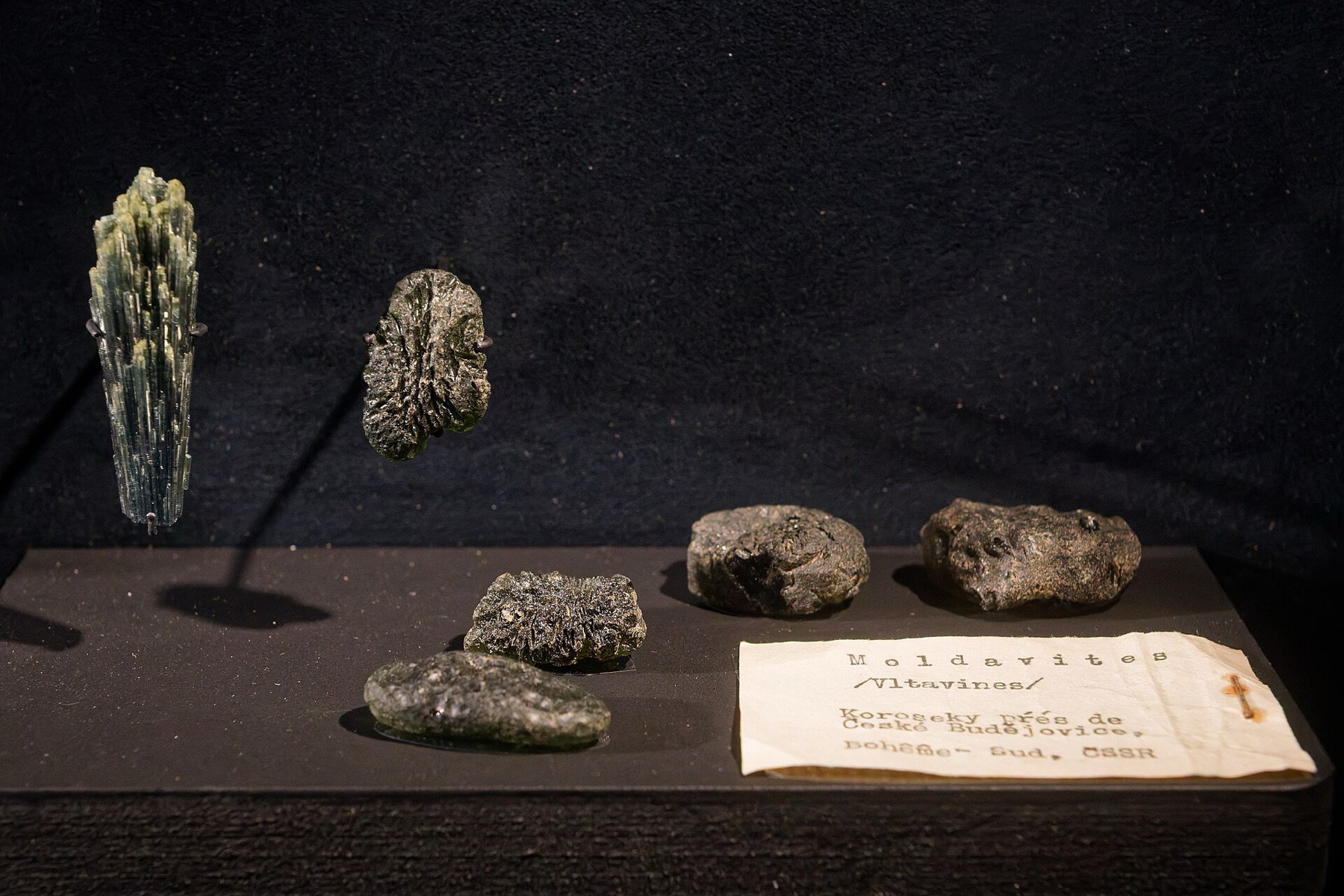
If you've never held one, it doesn't look like much at first. It's a small chip of bottle-green glass, wrinkled and pitted like the skin of a dried fruit. Hold it up to a window and it lights from the inside, a deep forest green, and something in you goes quiet and pays attention.
I'm far from the only one. Ask anyone who works with stones and sooner or later they'll lower their voice and tell you about moldavite. It has a reputation no other stone has. People put on a moldavite pendant for the first time and feel heat climb through their chest into their face. Collectors call it the "moldavite flush." Others describe buzzing hands, racing thoughts, dreams so vivid they wake up tired, and a sudden, unmistakable urge to change something big: a job, a relationship, a whole way of living. Plenty of people take it off and put it in a drawer. Crystal shops have a stock warning: start slow, build up to it, don't wear it to bed.
That's a pattern, not a few excitable people. It's been reported for decades, on every continent, by people who had never been told what they were supposed to feel. So I'll say it plainly before going any further: the experience is real. I feel it myself. Whatever is causing it, people aren't making it up.
I've spent my working life going back to the primary record and refusing to let anyone's label stand in for the evidence. That rule cuts both ways. I won't let a skeptic wave away what millions of people feel, and I won't pass off what we feel as something we've proven. The harder and more interesting job is to ask what, in the actual atoms of this stone, could answer to the feeling.
We went looking, and I believe we found a reason. It turns the usual story about crystals upside down, and it starts with something most people who love moldavite don't know: moldavite isn't a crystal.
OneBorn in seconds
About 15 million years ago a rock roughly a kilometer wide came out of the sky and hit the Earth in what is now Bavaria. The crater is still there. Geologists call it the Ries, and it's about 24 kilometers across. The medieval town of Nördlingen sits inside it today, its round wall echoing the round crater it was built in.
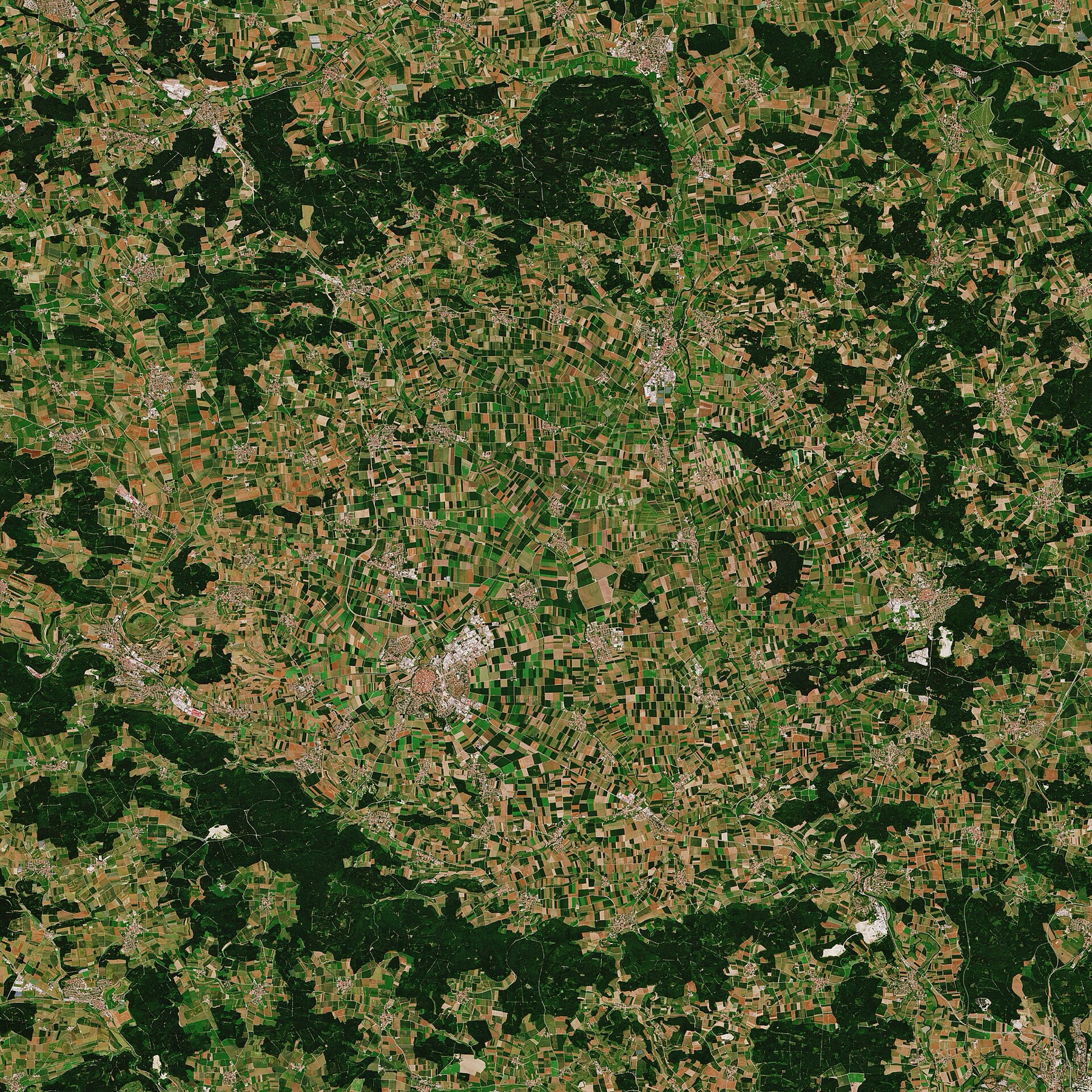
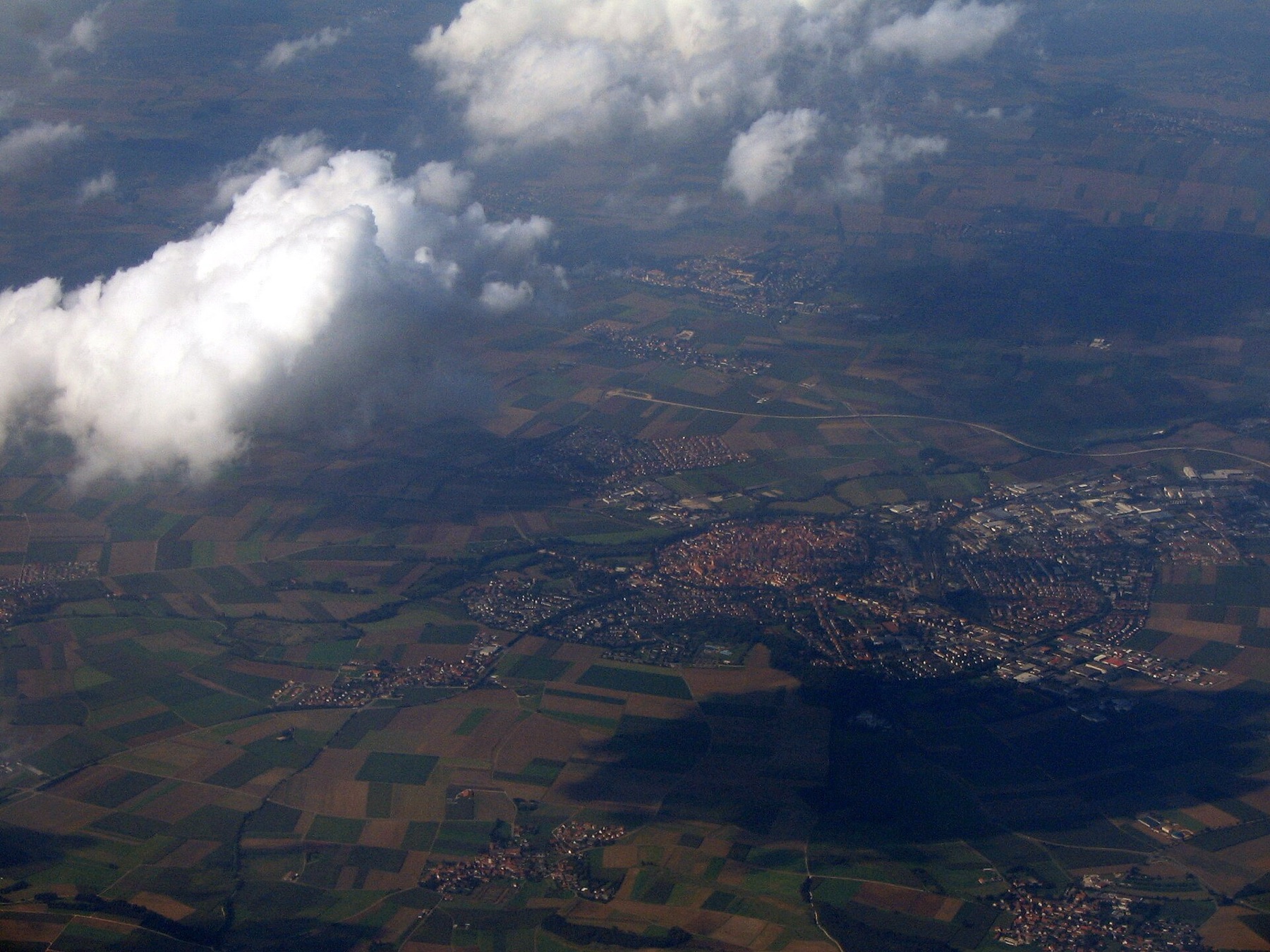
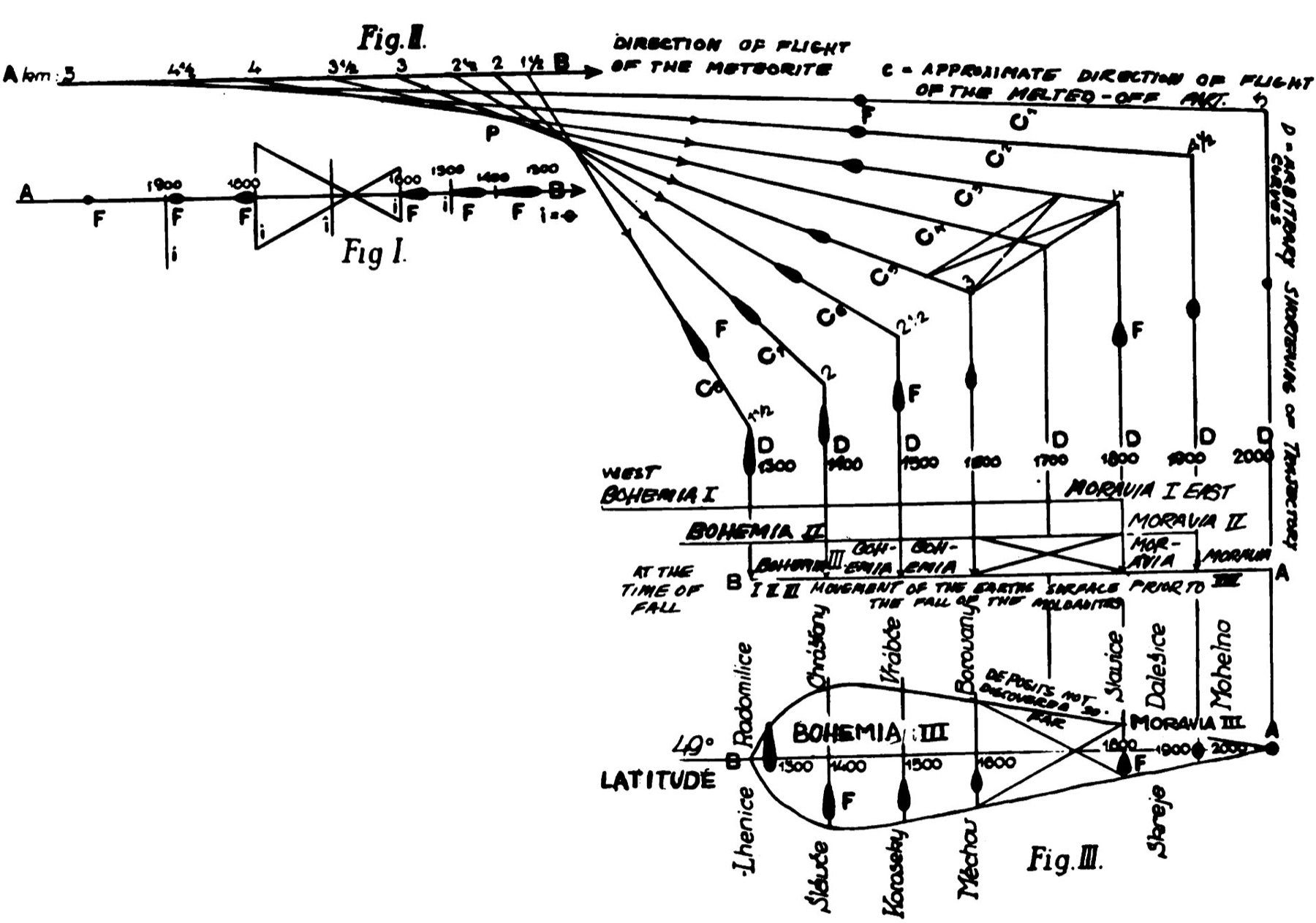
The energy released was more than a thousand times that of the largest nuclear bomb ever tested. At the point of impact the rock was hit with pressures over a hundred thousand times the air pressure around you and heated past 1,700 °C. The surface rock didn't just melt. It was thrown into the sky as liquid, splashes of molten earth that flew as far as 400 kilometers before they came down.
Those splashes froze in flight, in seconds. Everything that follows depends on that one fact.
They fell across what is now the Czech Republic, along the river the Germans call the Moldau and the Czechs call the Vltava. That's where the name comes from. Geologists call this kind of stone a tektite, a natural glass made by an impact. Every genuine moldavite on Earth comes from that one afternoon. When you hold one, you're holding a piece of a sky-event.
Think about what "frozen in seconds" does to the inside of a stone.
When molten rock cools slowly, over thousands of years deep underground, its atoms have time to find their places. They settle into neat repeating rows, the way a crowd files into stadium seats. That's how you get a crystal: quartz, amethyst, diamond. The same arrangement repeats millions of times in every direction.
Moldavite never had that time. It went from liquid to solid faster than you can read this sentence, and its atoms froze wherever they happened to be, like a photograph of the crowd mid-stampede. Nothing lined up. That's what a glass is, and it's the opposite of a crystal.
TwoThe bell and the record
This is where the puzzle starts.
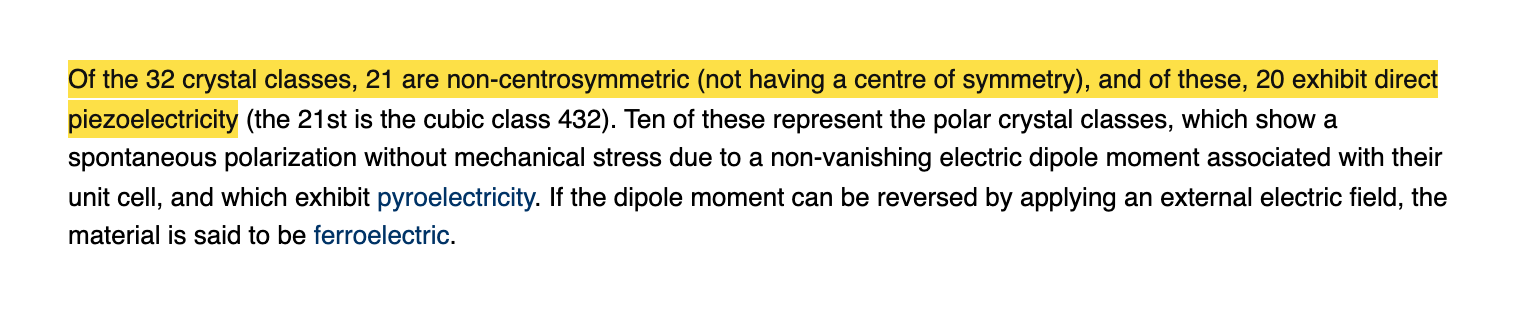
When most of us picture a crystal, we picture order, and almost every idea about crystal energy is built on that order. Perfect structure is what lets a crystal ring. Give a quartz crystal a pulse of electricity and it vibrates at one steady frequency, which is why there's a sliver of quartz keeping time in nearly every watch, phone and computer. Squeeze certain crystals and they produce a small voltage. That's piezoelectricity, and it's real and well understood. I've written about that side of the story in Crystal Healing: New Age Hoax or Leading Edge Science? and Crystals & the Code of Life, and I stand by the questions those pieces asked.
Moldavite breaks those rules. With no orderly lattice, it can't ring the way quartz does. It can't be piezoelectric, because that effect requires an ordered crystal. And when scientists measured its magnetism, they found it almost silent: its iron is locked in a form that holds essentially no magnetic charge (Rochette and colleagues, Geosciences, 2019).
By the usual crystal story, moldavite should be the weakest stone in the shop. Yet it's the one people can't wear.
When a theory predicts the opposite of what everyone experiences, it's looking at the wrong thing. So I stopped asking what the stone does and asked what kind of thing it is.
Matter can do two very different things. It can ring, or it can remember. Ringing needs order. A bell rings because it's even all the way around. Remembering needs the opposite.
Picture a sheet of ruled graph paper. It's perfectly ordered, every square the same, and it tells you almost nothing. Now picture a page of someone's handwriting, all loops and slants and crossings-out. That's the page that carries a letter, a confession, a life. A record is messy on purpose.
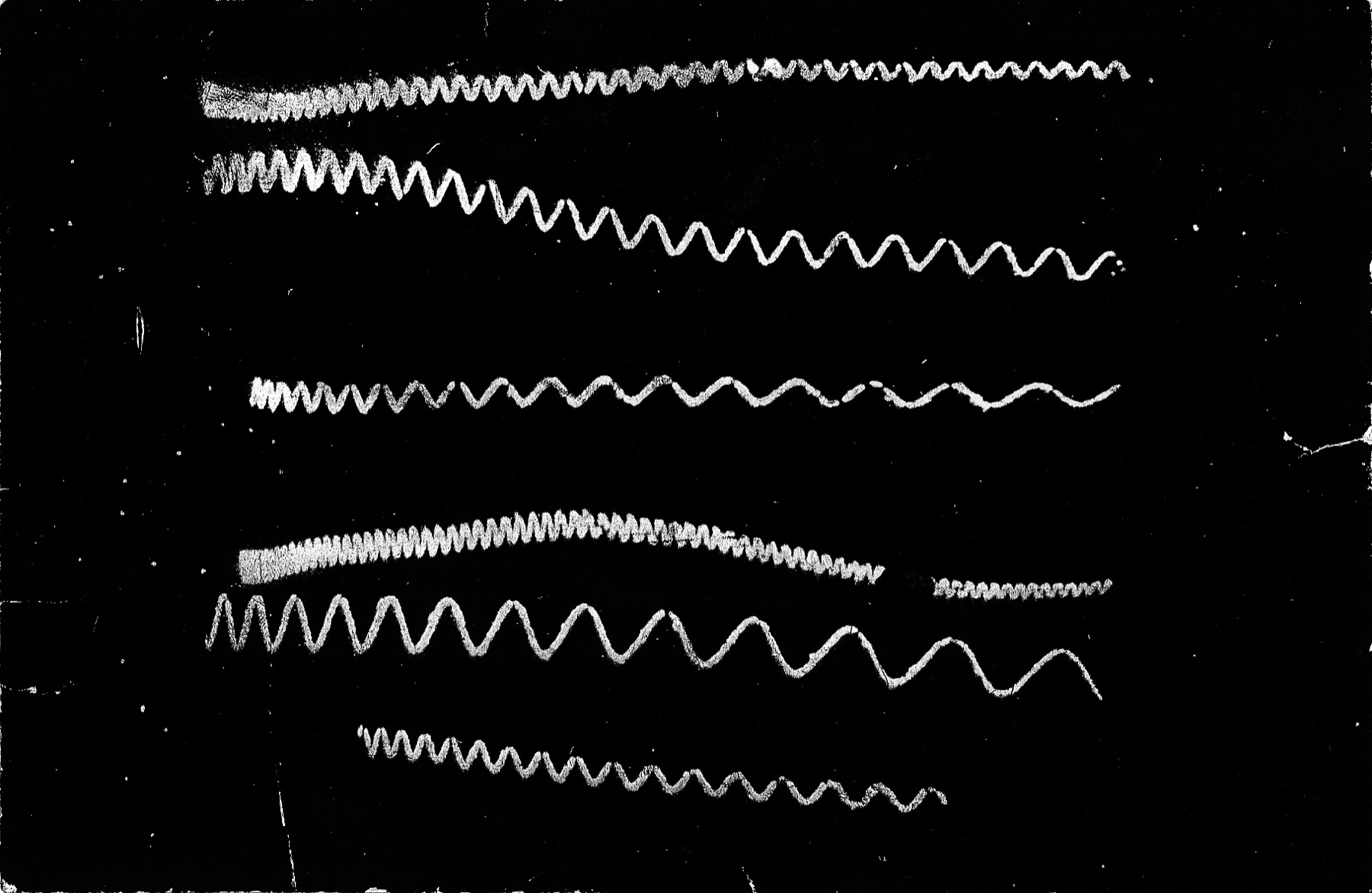
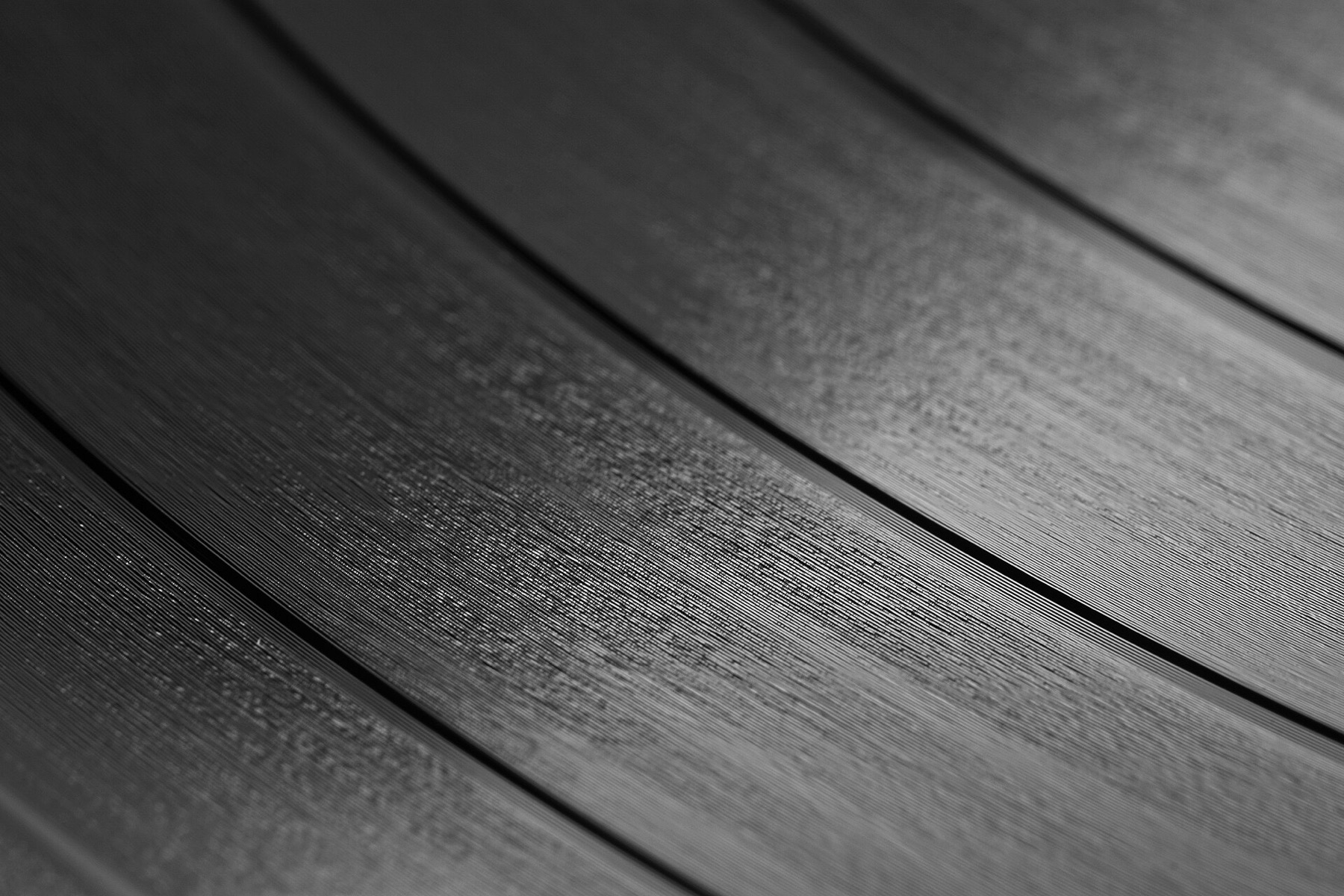
Or take a tuning fork and a vinyl record. Strike the fork and you get one tone. The record is a disc of tiny, irregular, scrambled-looking grooves, and because they're irregular they can hold an orchestra.
Quartz is the tuning fork. Moldavite is the record.
ThreeWhat's frozen inside
The next part goes down to the atoms, so here's the simple version to hold onto: when the melt froze in seconds, it froze a mess, and a frozen mess is a recording. Everything below just fills that in.
Look inside moldavite and you find millions upon millions of tiny flaws. All of them are real, and all of them can be measured with standard lab instruments.
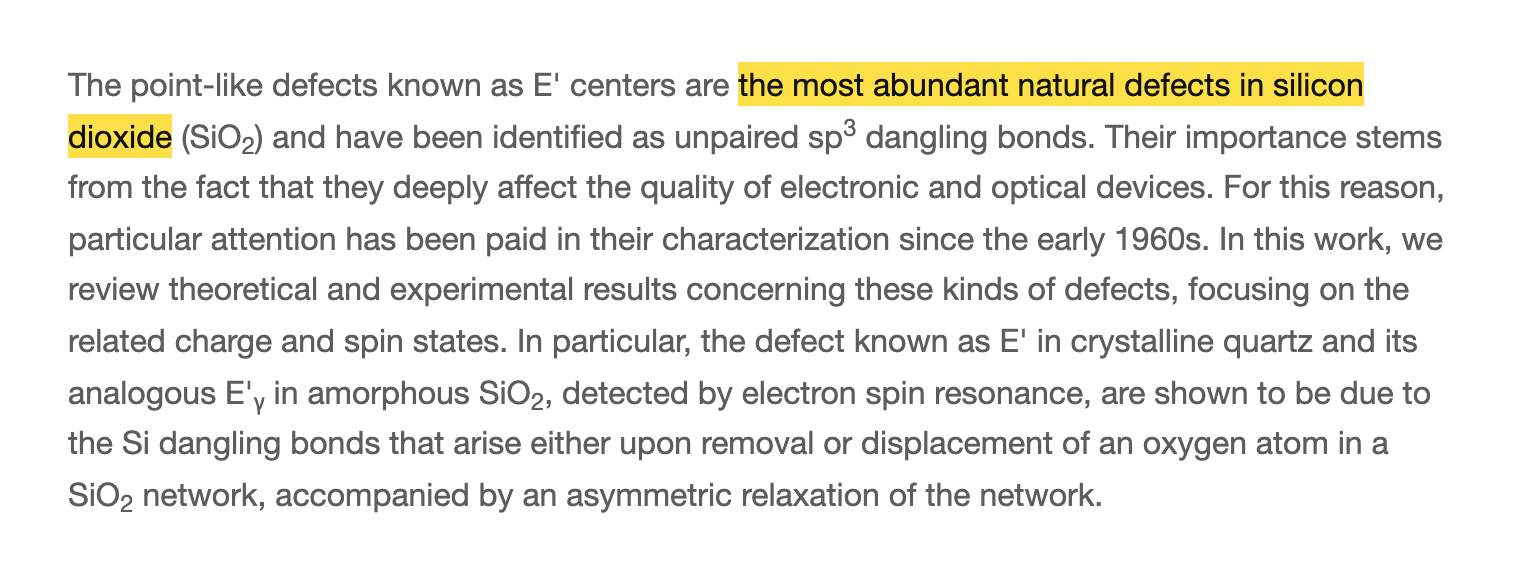
Unfinished handshakes. In a perfect quartz crystal, every silicon atom holds hands with four oxygen atoms, all the way through. In flash-frozen glass, countless atoms were caught mid-reach, with one hand left open, holding a single electron with no partner. Scientists call these dangling bonds, and they're the most common natural flaw in this kind of glass. Each lone electron acts like a microscopic magnet that can point one of two ways, a tiny on-off switch.
A fifteen-million-year tape. Those open hands are traps. For 15 million years, a faint rain of natural radiation from the ground and from space has passed through the stone, knocking electrons loose, and some of them fall into the traps and stay. Geologists use exactly this effect to date ancient materials. Warm such a glass gently and it gives off a faint glow as the trapped electrons escape, like playing back a tape of everything the stone has absorbed. Moldavite was recording its surroundings long before there were people around to be recorded.
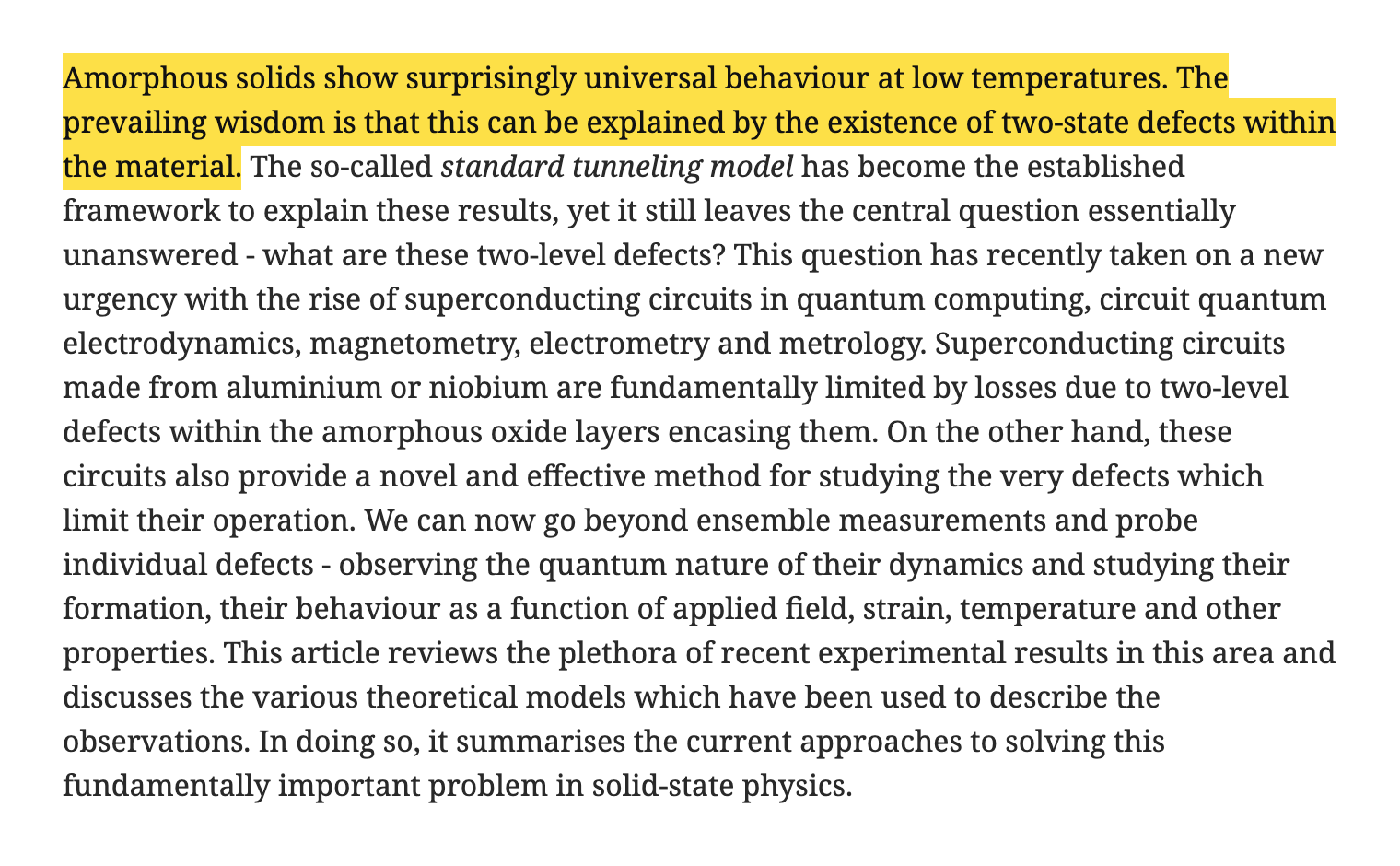
Tiny two-way switches. Glass carries one more kind of flaw, and perfect crystals don't have it. Scattered through every glass are small clusters of atoms that can sit in either of two positions and, at the quantum level, flicker between them. Physicists have studied these since the 1970s. They show up in nearly every glass ever measured, which is part of what makes something a glass. Researchers building quantum computers can now watch and control individual ones.
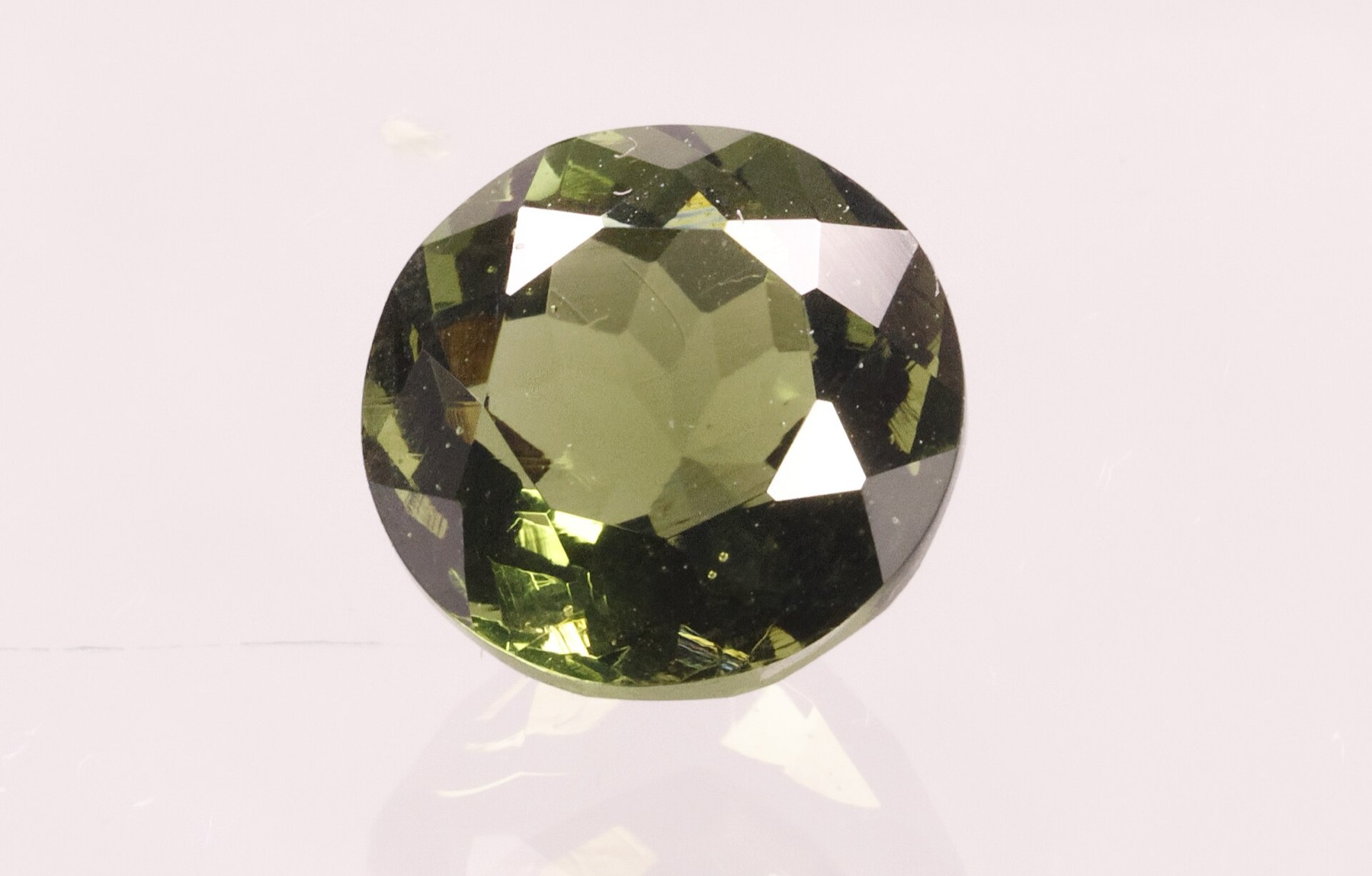
None of this is mystical. It's ordinary solid-state physics. But add it up and moldavite stops looking like a quiet stone. It's a dense frozen field of open hands, trapped charges and two-way switches, quiet in the ways we usually measure energy and busy in the ways we usually don't look.
FourWhy scramble is storage
This part sounds backwards, so I'll go slowly.
We tend to think "scrambled" means ruined. In the science of memory, scrambled is exactly what you want.
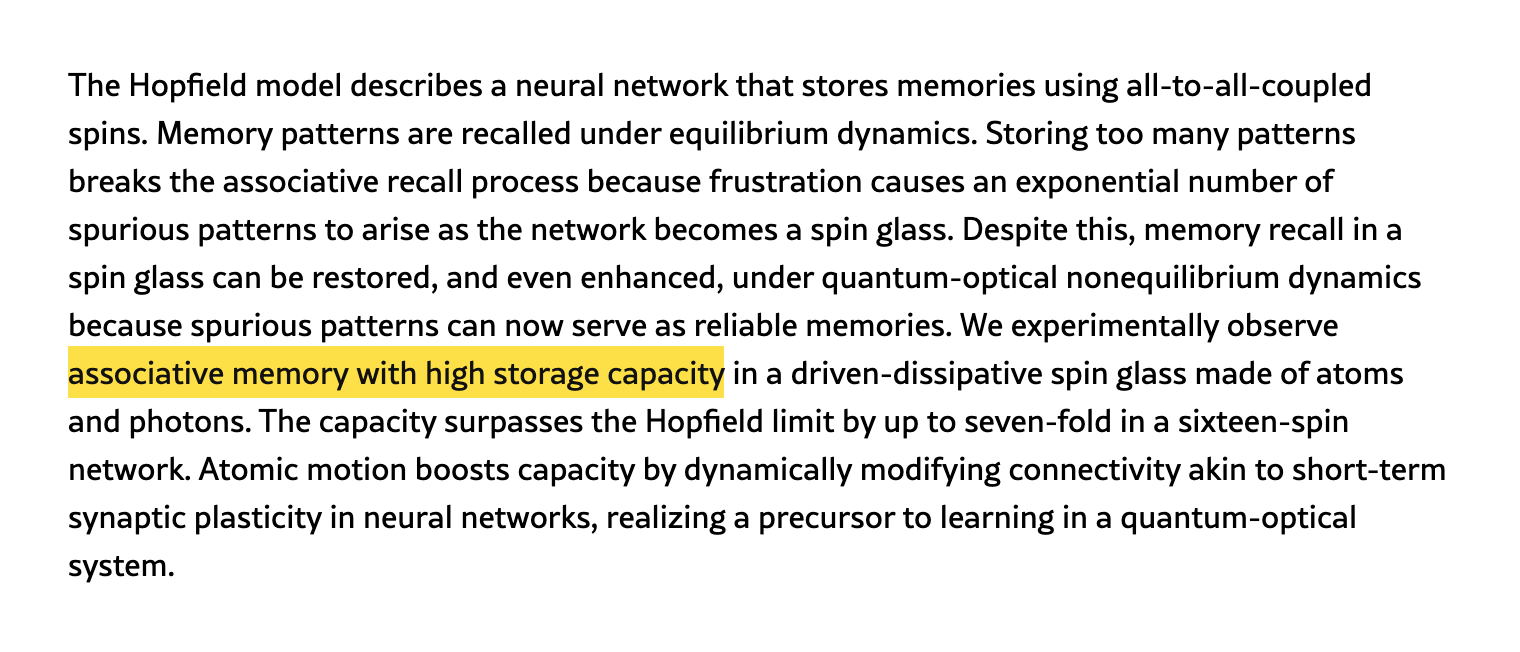
Picture a huge web of tiny switches, each one tugging on its neighbors. This one wants to flip up if that one is down; that one wants to match the one beside it. A web like that can't satisfy every tug at once, so it settles into a compromise, and it has an enormous number of compromises to choose from. Each one is a stable pattern the web can hold, and each stable pattern is a stored memory. The more tangled the web, the more it can hold.
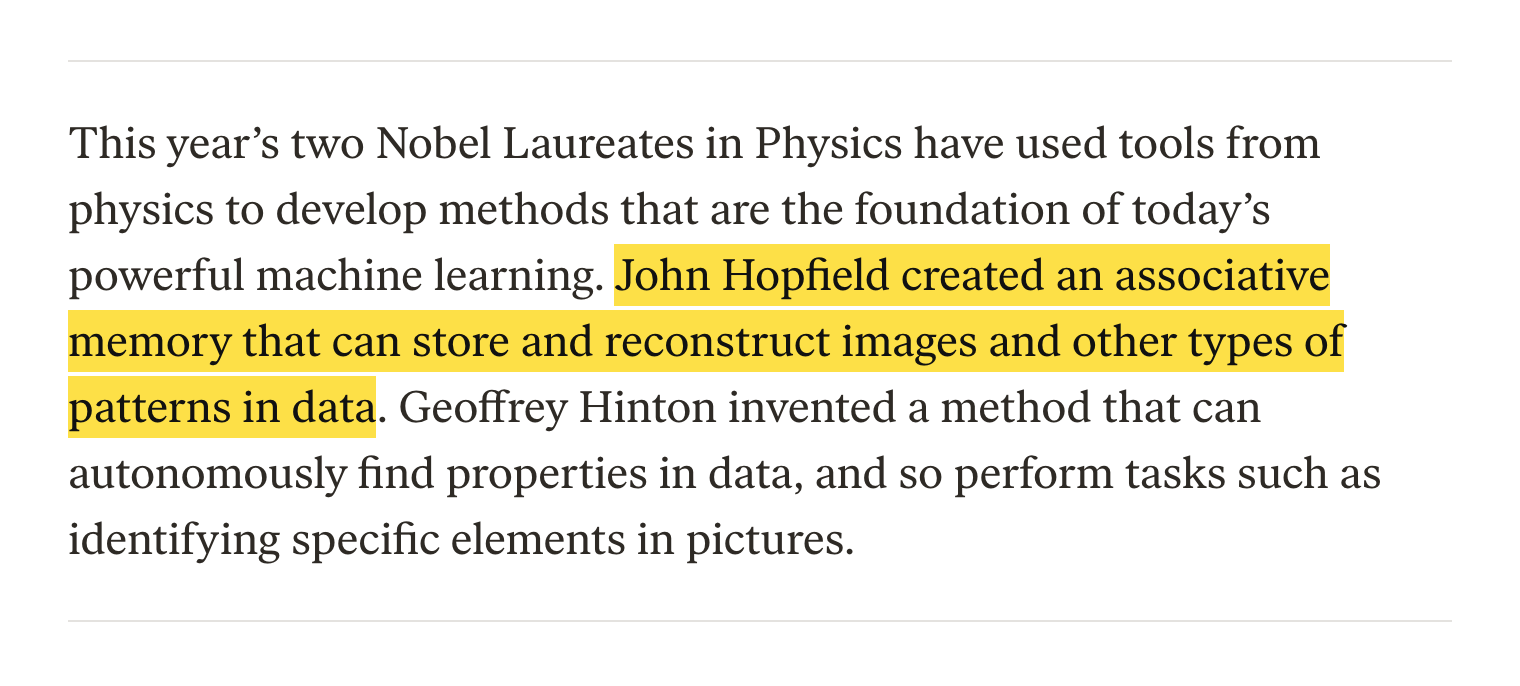
This is mainstream physics. John Hopfield shared the 2024 Nobel Prize in Physics for showing that a tangled network of simple two-way elements works as a memory, the same principle your brain relies on. You don't remember your childhood because your brain cells sit in a neat grid. You remember because your brain is a dense, tangled net.
Order forgets. Tangle remembers.
So moldavite's great flaw, that it never got organized, was never a flaw. It's frozen memory material. The disorder that makes it useless as a tuning fork makes it, in principle, one of the richest natural recording materials a stone can be.
FiveKeeping the shape, letting go of the size
This is the most abstract stretch of the piece. The short version: a flash-frozen glass keeps the shape of things and lets go of their size, and that one idea runs from a pebble in your palm to the edge of a black hole. If that's all you take from this section, it's enough.
When moldavite froze, it didn't keep everything. It kept one thing almost perfectly and threw another away.
It kept the shape of each atomic building block. Every silicon atom still sits inside its small pyramid of four oxygens, with angles almost exactly what they'd be in a perfect crystal. What it threw away was the pattern across distance: the long-range repeating grid, the scale.
Mathematicians have a word for anything that keeps angles but forgets size. They call it conformal. A world map is the everyday example. The familiar Mercator map keeps every coastline's angles true, which is why sailors loved it, and it badly distorts size, which is why Greenland looks as big as Africa.
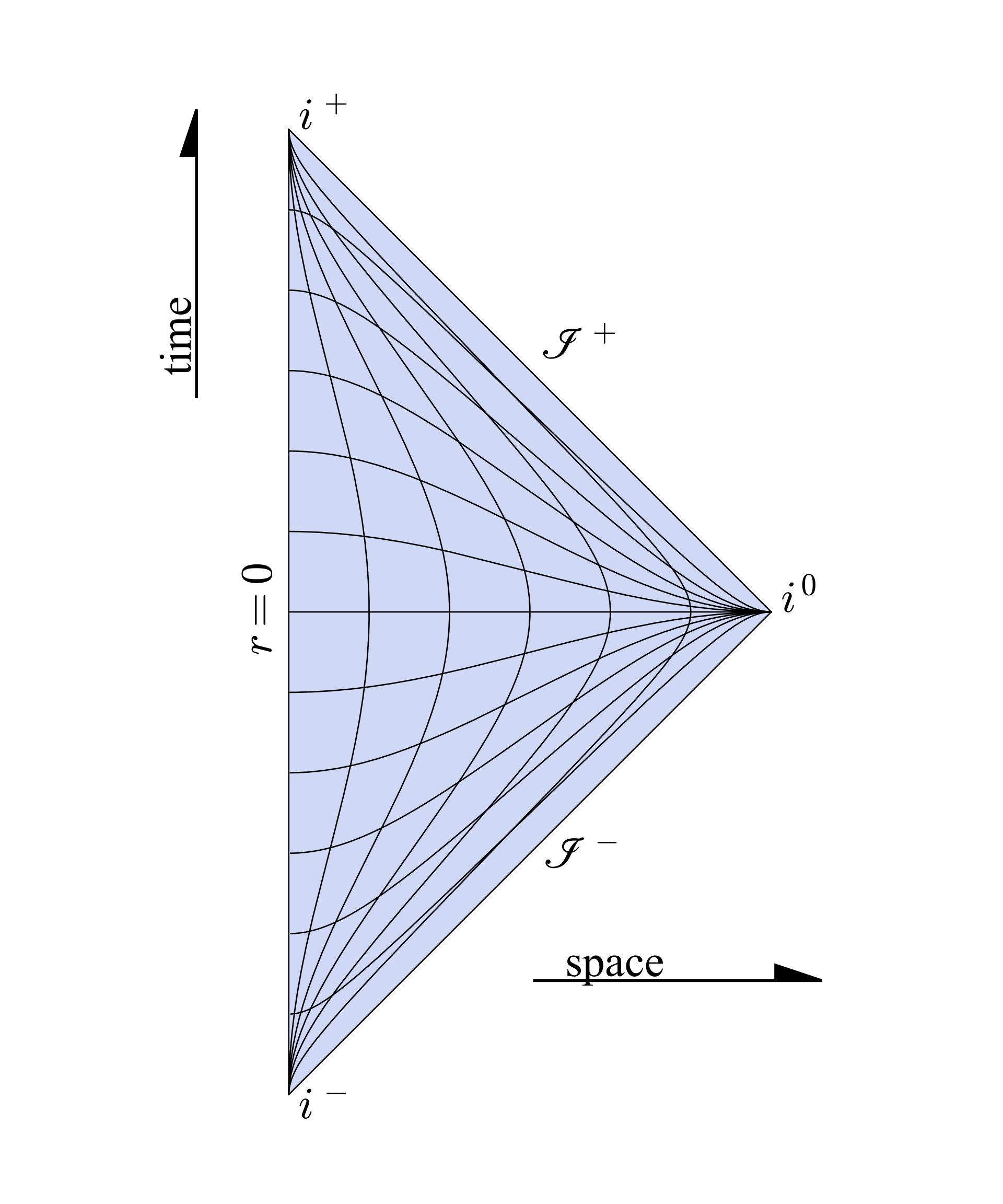
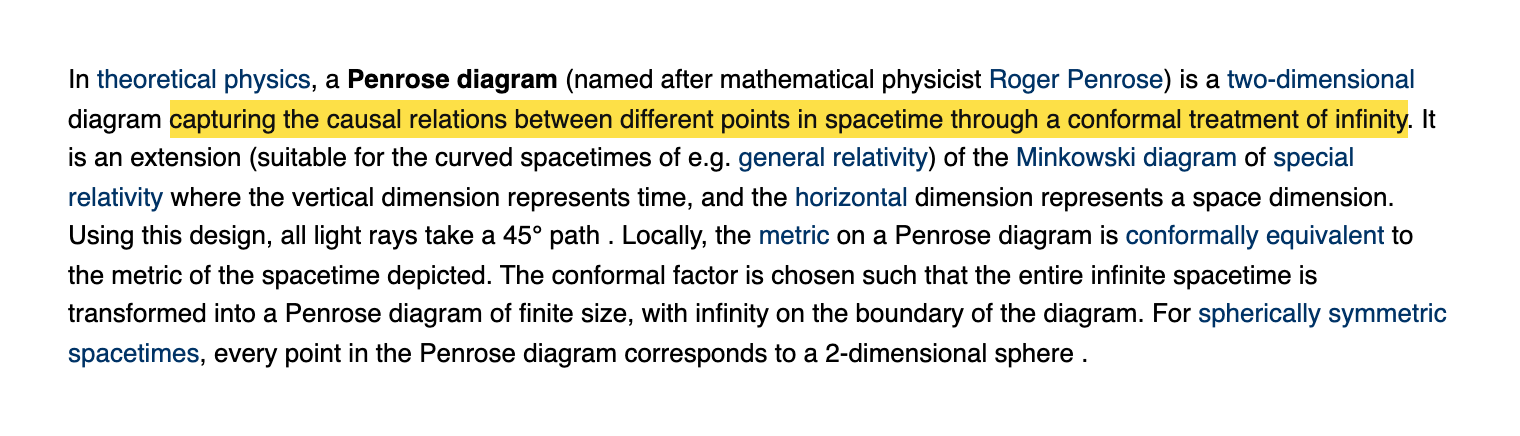
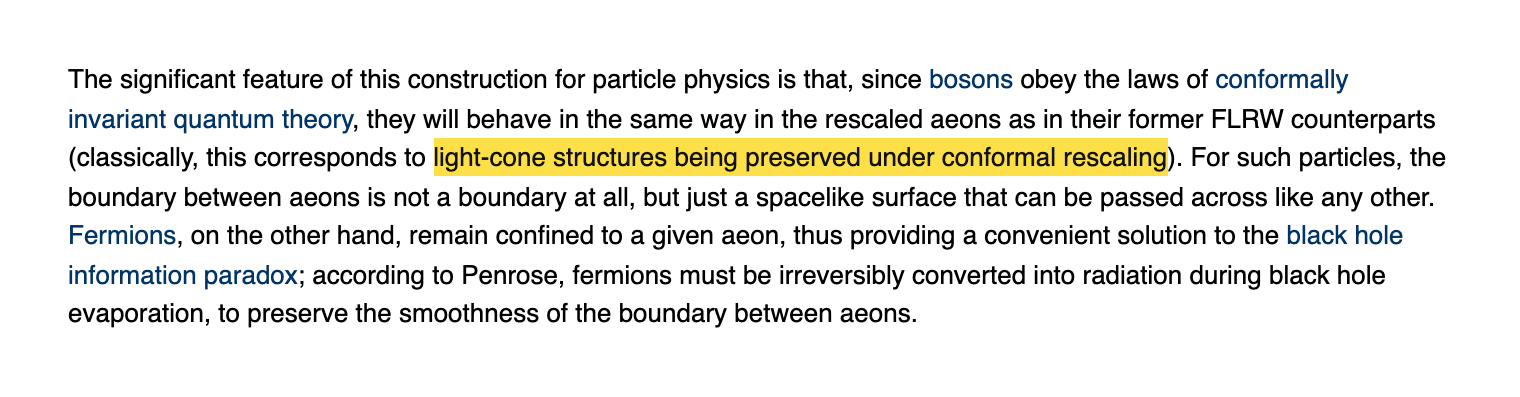
Roger Penrose, who won the 2020 Nobel Prize in Physics for his work on black holes, built some of his deepest ideas on exactly this. To draw a black hole, or the entire infinite universe, on one sheet of paper, he used a conformal map that throws away size and keeps the angles of light true, so the essential structure survives even at infinity. In his boldest theory, conformal cyclic cosmology, he proposed that at the very end of the universe, when nothing with mass is left to measure size by, only the shape survives, and that shape becomes the seed of the next universe.
I'll be careful here. Moldavite isn't a black hole, and nothing about black holes made it. This is a rhyme between two different things, not a shared mechanism. But it's a real rhyme. In the most violent events nature knows, an impact, a collapse, the end of a cosmos, what survives is shape rather than size, pattern rather than scale. Moldavite is that law in a form you can hold.
SixThe two faces of everything
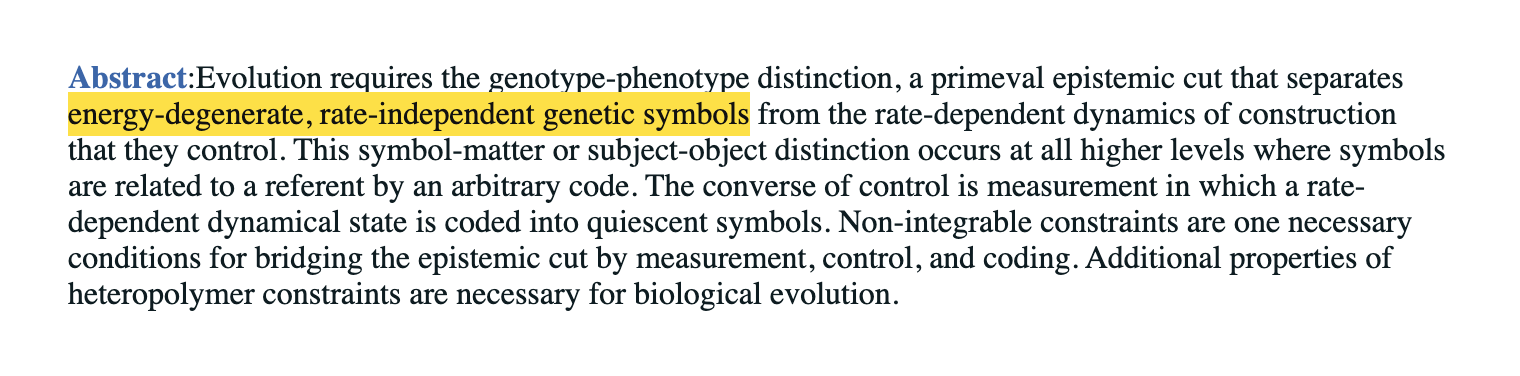
My father, the theoretical biologist Sungchul Ji, spent decades on an idea I now think is one of the most important of our time. He called it gnergy: reality has two faces that always travel together, energy and information. Energy is the push, the force, the fire. Information is the pattern, the code, the form. He has even asked whether mathematics might be the shadow of reality.
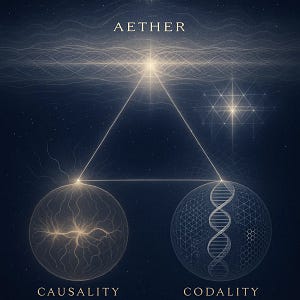
With Joshua Davis, he took it further. Things in the universe can be connected in two ways. One is causality, where one thing pushes another, like billiard balls. The other he called codality, where two things become correlated because both are linked through a third thing that holds a shared code (Ji and Davis). You and your sibling resemble each other because you share DNA inherited through your parents, not because one of you shaped the other's face. I followed where that leads in Bridging Energy and Information: Codality in an Aetheric Framework.
Look at the two kinds of stone through that lens.
Crystal · the energy face
Order. It rings. It works by resonance, by causality, by push. Quartz in a watch.
Glass · the information face
Disorder. It remembers. It's built to be the third thing, the holder of a code. Moldavite.
All my earlier writing on crystals was about the first face. Moldavite is the second, the one I'd never named and the one that wouldn't let me go until I did. The old traditions that treated certain stones as vessels of memory weren't being childish. Long before instruments, they were reading by hand the face of matter our science is only now learning to measure.
SevenWhy moldavite is "too much"
Now back to where we started. Why does moldavite feel like so much more than other stones? Why do so many people call it a stone of accelerated spiritual evolution? Why do they say it amplifies intention, that with moldavite near, the distance between what you intend and what shows up in your life seems to shrink? And why does that leave so many people disoriented?
I'll tell you how I've come to understand it, and I'll mark which parts come from experience and tradition and which parts the science can show.
Start with something everyone has heard. Someone walks a microphone too close to a speaker. Your voice comes out of the speaker, goes back into the mic, comes out louder, goes back in, and within a fraction of a second the room fills with a squeal. Nothing new was added. The loop just got short. When the distance between what goes out and what comes back shrinks, everything gets amplified, and if you don't know what's happening it's overwhelming.
Or a mirror. Across the room it shows you yourself, softened by distance. Three inches from your face it shows you every line and every flicker in your eyes. It's the same mirror at a shorter distance, and suddenly it's almost too much to look at.
I believe this is what moldavite does. It has no energy of its own to blast at you. It works the other way: as a memory, it takes what you bring and holds it close. It becomes the third thing in a loop between you and your own intention. You bring a pattern, a hope or a fear or a direction you're reaching for, and the stone seems to set it right in front of you, three inches from your face, and keep it there.
That's what people mean when they say it reduces the distance between intention and manifestation. In ordinary life there's a long, slow loop between who we intend to be and what we actually meet. That distance is a mercy. It gives us time to change our minds, to soften, to grow into what we asked for. With moldavite, in the experience of so many, the loop gets shorter. What you're carrying comes back faster and louder. If it's clear, you get the acceleration people describe as spiritual evolution on fast-forward. If it's tangled, with old grief or unspoken fear or a life you've outgrown, that comes back louder too. That's the squeal: the flush, the restlessness, the sleepless nights, the urge to change everything at once.
So I don't think the people who take it off are failing. They're turning down the gain. And the old advice to start slow is wise. You wouldn't walk into a recording studio and push every slider to the top on your first day.
Here's where I have to be careful. What I've just described is the frame I hold from my own experience and from the testimony of many others, and the science supports half of it strongly. The physics really does show that moldavite is a dense, high-capacity memory material, built to hold pattern rather than broadcast energy. That fits the experience precisely: a stone that amplifies what you bring, not one that pushes something onto you. What the science hasn't shown yet is the other half, a measured path by which a human intention gets written into the stone and returned. I believe the loop is real because I feel it. Believing and demonstrating are different things, and I'd be breaking my own rule if I blurred them.
EightHow to be with it
If you're drawn to moldavite, or you already have a piece in a drawer because it was too much, here's what I'd offer. This comes from experience, not from a lab.
- Know what it is before you wear it. Most of the disorientation comes from not knowing. Feedback is frightening if you think the building is coming down. It's just loud if you know someone moved the microphone.
- Set your intention first. If the stone amplifies what you bring, what you bring matters. Before you hold it, get clear, even in one sentence, about what you're reaching toward. A clear signal comes back clear.
- Start slow. Minutes, not days. Hold it, notice what rises, put it down. Let your nervous system learn it.
- Take it off when it's too much. That's wisdom, not weakness. You're the one who sets the gain.
- Let it be cleared. In a laboratory, this kind of glass can literally be reset: gentle heat releases what its traps have stored and returns them to zero. Please don't put yours in the oven, since that's a lab procedure, not a home ritual. Traditions have always had their own ways of clearing a stone, with breath, intention, running water, moonlight and rest. It strikes me that the idea of clearing a memory-stone, which skeptics find so silly, has a real physical counterpart in exactly this material.
NineThe flower that breathes
There's one more part of this story, and it's the one closest to my heart.
For several years I've been part of a work called Scalar Flower. It began as a vision, received by a seer named Vedha on February 25, 2023. She saw the Flower of Life, the ancient lattice of overlapping circles, laid over the wheel of the heavens as a whole new model of the sky. The work of making it exact came afterward. We rebuilt the birth chart from the real sky, with real astronomical positions and every planet at its true height above or below the plane, and turned it from a flat wheel into a three-dimensional field you can turn in your hands.
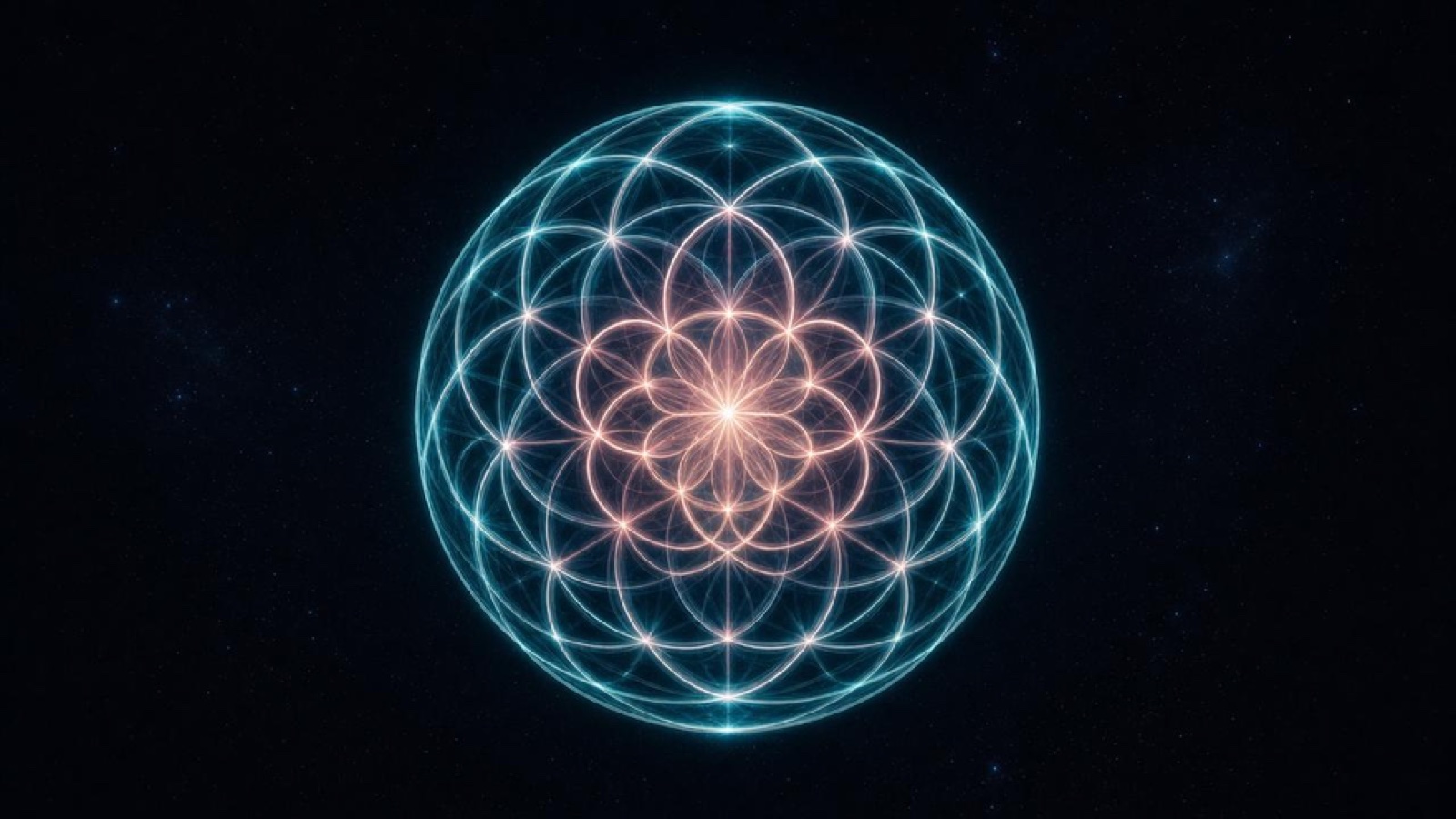
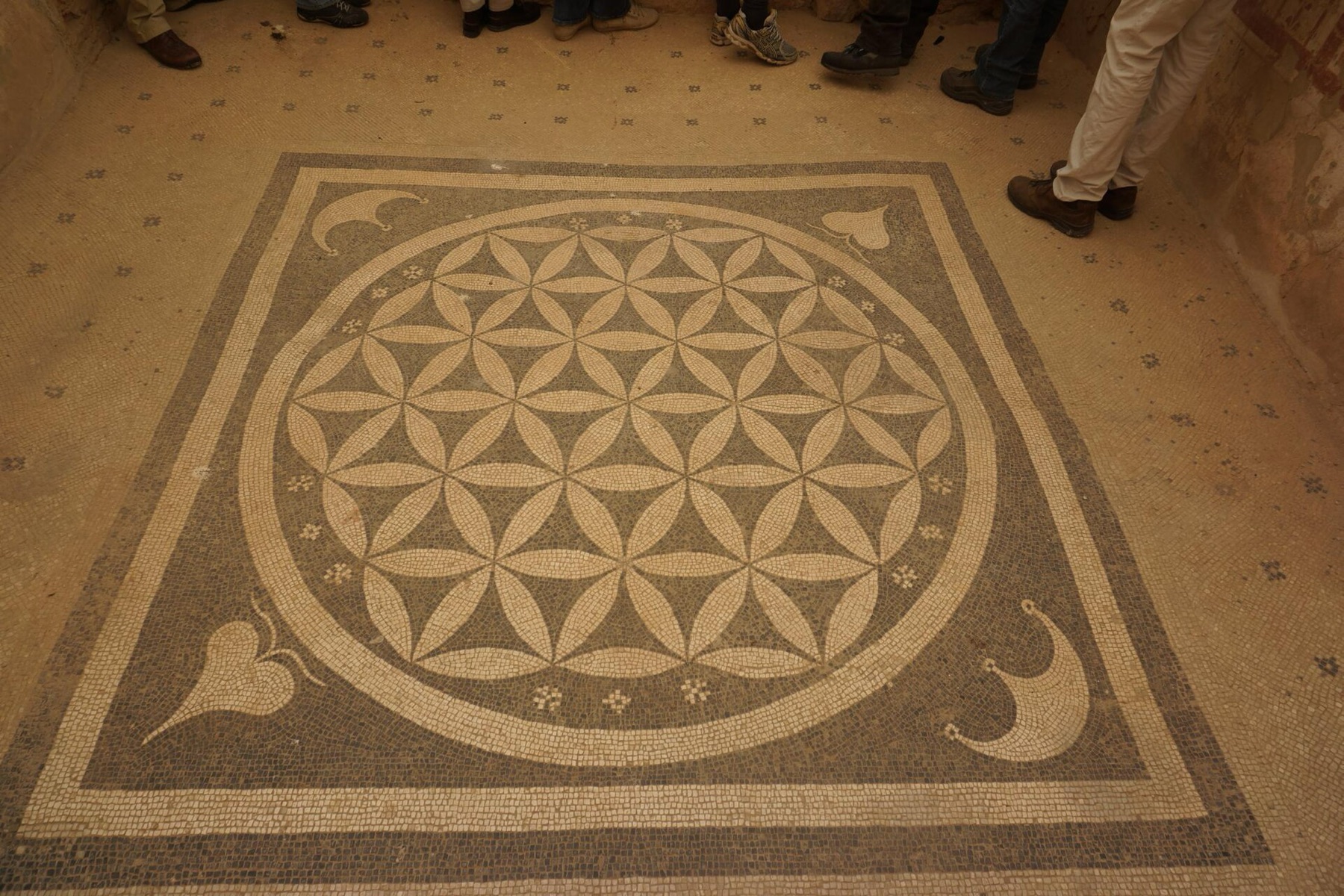
When I began to understand moldavite, I realized I'd been building its twin. Scalar Flower is a living, breathing talisman of the same principle. Four things connect them.
Both are records of a single sky-moment. Moldavite is one instant of the sky, an impact, frozen into glass. Your Scalar Flower chart is one instant of the sky, the moment you arrived, frozen into geometry. That exact arrangement of the heavens won't come around again for tens of thousands of years. Moldavite holds the sky's catastrophe. The Flower holds your beginning.
Both keep their shape when the frame changes. Moldavite kept its shape and forgot its size. Scalar Flower is built on the same law. Its core measurements are invariant: they come out identical whichever zodiac you use, whichever house system, whichever tradition, tropical, sidereal, Vedic or Western. Turn the field, tilt it, look from any side, and its relationships hold. It's the conformal law again, here at the scale of one human birth. A new instrument in the lab, the Conformal Vortex, flattens the sphere of your field into a Flower of Life while keeping every angle true.
Both are anchored in memory. Every Scalar Flower chart is anchored on the lunar nodes, the two points where the Moon's path crosses the Sun's. In the Vedic tradition the south node, Ketu, signifies the deep past: inherited memory, what the soul already carries. Ketu rules the nakshatra called Mula, which means "the root," and Mula is exactly where modern astronomy places the heart of our galaxy and the direction our Sun is traveling through the stars. I don't think that overlap can be overstated. The axis the instrument stands on, the ruler of the galaxy's root and the star-station named "root" are bound into a single knot, and at its center sits the keeper of memory. A memory-stone in the hand, a memory-anchor in the sky.

Both are records, not forecasts. This is where they meet most closely. Moldavite doesn't push anything onto you; it holds what you bring and returns it. Scalar Flower works the same way. It doesn't predict your life. We tested whether it could, published the result, and it couldn't. What it shows you is the shape of the ground you were born standing on, and then it hands the pen back. On the site we put it this way: a field of choice, not a forecast. The geometry registers; we don't claim it transmits.
That's what a talisman is in its oldest sense: a held pattern you return to, an object that keeps a shape faithfully so you can orient yourself by it again and again. It was never meant to be a gadget that fires a force at you. Moldavite does this in matter. Scalar Flower does it in mathematics.
And the Flower is living because it moves with you. A stone stays as it was struck. Your field in Scalar Flower breathes. It opens from being, the still flower of your birth moment, into becoming, a slowly turning spiral carried forward along the sky's real motion. Your progressed field shows where its shape stands in this season of your life. The Daily Flower lays each day's sky over your own. The Field Listener lets you hear your chart as a chord.
The stone remembers the sky. The Flower remembers you.
So I've come to see them as two halves of one practice. Hold the moldavite with a clear intention; turn the Flower and see the shape you came in with. One shortens the loop between your intention and your life. The other shows you the ground that loop runs over. In both, the part that matters most is the one neither can supply: the hand that holds the pen.
TenThe waterline
A sacred technology should be one you're allowed to question. A practice that can't survive questions is fragile, so here is a clean line between what we've shown and what we haven't.
What's solid. Moldavite is natural glass made in seconds by an impact 15 million years ago. Its structure is disordered and full of measurable traps and two-way switches, and it has been recording its surroundings that whole time. Disordered networks of two-way elements are memory systems; that's Nobel-recognized physics. Moldavite's quiet profile, with no ring, no piezoelectricity and almost no magnetism, fits a memory material far better than a broadcaster. And the experience of intensity is real and widely shared.
What's not shown yet. No one has measured a physical path by which a human intention is written into the stone or read back out. The cleanest quantum-memory behavior in glass has been seen in deep cold, not at the warmth of a hand. And we don't yet know whether the intensity people feel is the stone meeting them, or them meeting themselves with the stone as a focus. I hold both possibilities with respect. Neither one cheapens the experience.
What makes it a technology. It can be tested. If moldavite's memory lives in those traps and switches, its state can be read with instruments that already exist: electron spin resonance spectrometers and thermoluminescence readers, standard equipment in university labs. You could take a moldavite, record the exact fingerprint of its flaws, have someone hold and charge it the way practitioners do, with a visually identical fake as the control so no one knows which is which, and then measure whether anything in the real stone changed. If nothing changed, we've learned something true. If something did, it would be one of the most important small experiments anyone has run. Either way, we'd be asking the stone a question it can answer.
That's the spirit of the Scalar Flower work too: compute first, interpret second, test every claim, and publish what fails as openly as what holds. We do that because we take the sacred seriously enough to look.
Moldavite isn't a crystal humming one perfect note. It's a piece of frozen sky, a glass born in seconds out of catastrophe, carrying a tangle of traps and switches that has been recording the world since long before us. As matter goes, it's closer to a memory than a bell. And a memory held three inches from your face, your own intention handed back faster and louder than life usually allows, is a lot to hold.
The millions who felt that something is held in this stone weren't fooled. They were feeling the difference between a note and a recording, and reaching with an old human instinct for the stone that remembers. Science is learning to say in the language of atoms what they already knew in the hand.
And when the stone is too much, set it down. Turn the Flower instead. Look at the shape you came in with. Then pick up the pen.